
5-Why Analysis

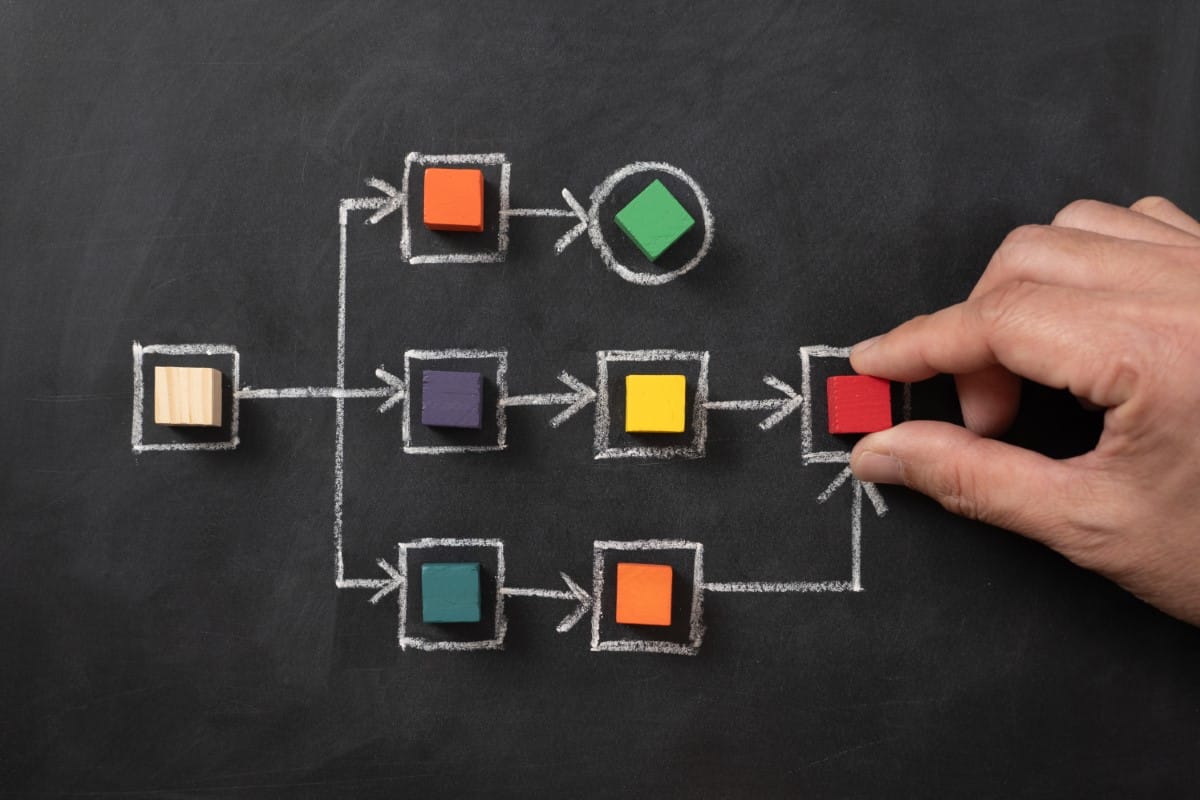
5-Why Analysis showing five connected Whys arranged as a standard work layout with linked Whys.

Find the True Root Causes

This video shows how the 5-Why Analysis helps you find the root cause of a problem. You learn how to ask simple, direct questions that lead you past quick fixes and down to the real issue. The video explains how this method brings clarity, cuts confusion, and helps you take actions that solve problems for good.

5 Why Analysis Explained Simply

The 5 Why Analysis helps solve problems at their root.
It works by asking “why” five times or more.

Why the 5 Why Method Works

Children keep asking why until things make sense.
This method uses the same simple logic.

Step 1: Define the Problem Clearly

State the problem in clear terms.
Avoid vague or broad wording.

Example:
Customers receive the wrong pizza size.

Step 2: Ask the First Why

Why does this problem happen?

Answer:
An employee mishears the order.

Step 3: Keep Asking Why

Why was the order misheard?
Because the restaurant was noisy.

Why was it noisy?
Many phone orders at the same time.

Why only phone orders?
There is no other ordering system.

Step 4: Confirm the Root Cause

The real issue is missing systems.
A digital system would remove noise errors.

Step 5: Create an Action Plan

Build an app or website for orders.
Track progress and results.

When to Use the 5 Why Analysis
  • Quality issues

  • Process failures

  • Repeating customer complaints

Common Mistakes
  • Guessing instead of using facts

  • Stopping too early

  • Finding causes without action

Combine with a Fishbone Diagram

The diagram lists all possible causes.
The 5 Why method finds the main one.

Is–Is Not analysis table icon showing a grid with a green checkmark and red cross for comparison.

5-Why Analysis Template Preview

📊 DASHBOARD

Live KPI Dashboard

Real-time overview of root cause categories, 6M distribution, and action completion rates.

🔍 5-WHY ANALYSIS

Structured TO/TN/SO/SN Framework

Ask “Why?” systematically through 5 levels with automatic Technical/Systemic classification.

Free Download

Is–Is Not analysis table icon showing a grid with a green checkmark and red cross for comparison.

Download: 5-WHY Analysis Template

Professional Excel template featuring 5-level root cause analysis with Technical/Systemic (TO/TN/SO/SN) categorization, 6M cause codes, real-time KPI dashboard, and corrective action tracking. Includes 5 industry examples.

📄 New to 5-Why Analysis? Start with the Quick Guide (PDF)

📅 Updated December 2025 – Now with live Dashboard KPIs

What Is the 5-Why Analysis?

5-Why Analysis is a root cause analysis tool used in quality management and continuous improvement programs. It involves asking “Why?” five or more times to get to the base cause. It relies on the principle that true problem solving is rooted in resolving root causes, not only in dealing with symptoms.

This methodology was critical to the production method of Toyota and instrumental in broader application Lean developed by Sakichi Toyoda, founder of Toyota Industries in the 1930s. It was first designed for the assembly line to streamline operations and minimize waste.

Free 5-Why Analysis Quick Guide

This guide helps you use the 5-Why method to find the root cause of problems faster and make better decisions.

Test Your 5-Why Analysis Knowledge

Answer 10 short questions to review the 5-Why method and check how well you can find root causes.

Why Use 5-Why Analysis?

The 5-Why Analysis allows the user to reduce the likelihood of solving effects, rather than the base problem itself.

The 5-Why Analysis should be used to assist the team in identifying the true root cause, so their corrective action truly addresses the underlying issue and not just its immediate symptoms. Then we can address things in a more sustainable way with solutions that are actually long term.

When to Use 5-Why Analysis

The rule: Use 5-Why Analysis when you know what went wrong, but not why it happened:

8D-Report Step D4

In the 8D problem-solving process, Step D4 requires root cause identification. After problem definition (D2) and containment (D3), 5-Why Analysis systematically traces the cause chain. The identified root cause drives corrective actions in D5 and preventive actions in D7.

The A3 problem-solving method dedicates a section to root cause analysis. 5-Why Analysis fits perfectly here – it’s visual, fits on one page, and creates a clear logic chain from problem to root cause that stakeholders can follow.

In Six Sigma projects, the Analyze phase identifies root causes of variation. 5-Why Analysis complements statistical analysis by providing logical cause-effect reasoning that connects data patterns to actionable root causes.

In the PDCA cycle, the Check phase compares results to expectations. When gaps appear, 5-Why Analysis explains why the plan didn’t work – driving adjustments in the Act phase.

For simpler issues, JDI (Just Do It) provides a fast-track approach. Even here, a quick 5-Why Analysis ensures you’re fixing the cause, not just the symptom – preventing the problem from returning.

When the same issue keeps appearing despite previous fixes, 5-Why Analysis reveals why solutions aren’t sticking. Surface-level fixes treat symptoms – 5-Why Analysis uncovers why the problem keeps coming back.

When customers report quality issues, 5-Why Analysis goes beyond “what went wrong” to discover “why it went wrong.” This prevents repeat complaints and demonstrates commitment to permanent solutions.

Manufacturing defects often have hidden root causes. A machine produces bad parts – but why? 5-Why Analysis traces from the defect through process parameters, maintenance gaps, or training deficiencies to the true origin.

Internal or external audit findings require root cause analysis. 5-Why Analysis transforms audit observations into actionable improvements by understanding why the nonconformance occurred.

Key Principles of 5-Why Analysis

The principles of 5-Why Analysis are rooted in its simplicity and effectiveness as a problem-solving tool:

Diagram showing 5-Why analysis principles: action orientation, sequential questioning, iterative process, root cause focus, group participation, simplicity, documentation.

Sequential Questioning

5-Why Analysis drives to the heart of situation by repeatedly asking 'Why?' to each answer provided. We repeat this process until we find the root cause of the problem. It is five as a rule of thumb, but it might be more or fewer than that — you stop asking those questions just when you find out what was the underlying cause.

Iterative Process 

The 5-Why Analysis, however, is not always such a linear and straightforward process. The answers may need to change as a deeper understanding of the situation emerges. This cycle is there for a better understanding of the problem and its reasons.

Root Cause Focus

The whole point is to not just put a band-aid on it by treating symptoms, but figure out what the real issue is that created this problem. This can help finding a long term solutions, which can reduce the possibility of problems coming back again, rather than a temporary fix.

Cause-and-Effect Relationship 

Each proceeding step in the 5-Why process builds on that as you establish a clear path of cause and effect. This assists in getting a view from the top on how all these factors link up and add to the problem.

Simplicity and Accessibility

One of the key principles of 5-Why Analysis is its simplicity. It does not require statistical analysis or complex tools, making it accessible to people at all levels of an organization. This simplicity encourages wider participation in problem-solving.

Team Participation Without Blame

Engaging a team in the 5-Why process is crucial. Different angles can generate a better understanding of the problem and its roots. It encourages problem solving in a collaborative manner, and helps to subvert personal biases having an effect on the analysis. Therefore, the 5-Why process is driven by a fundamental premise of tackling systemic issues and processes on top of individual mistakes or failures. The focus is on process rather than blame.

Action-Oriented Approach

The final step is discovering the root cause, knowing how to fix it and developing a plan of action to address it. This ensures that the findings are immediately implemented into useful real-world improvements.

Documentation and Knowledge Sharing

Cataloging every step of the analysis and respective conclusions for further cases. This sharing, organization-wide provides even more knowledge and can help to prevent those similar issues from occurring in the future.

How to Conduct a 5-Why Analysis

Step 1: Define the Problem Clearly

Clearly Define the issue at hand

The first step in 5-Why Analysis is to clearly identify and describe the Problem. This includes a well-worded, direct problem statement that targets the issue and refrains from general symptom stuff.

So it is crucial to be as precise as possible in this step, as the effectiveness of the entire analysis depends on a correct understanding of the problem. Gather all relevant information, observe the issue first hand if possible, and consult with those directly affected by or involved in the problem. A well-defined problem statement sets a solid foundation for the subsequent analysis.

Problem statement for a 5-Why Analysis showing customer complaints about burnt pizzas.

Step 2: Ask the First "Why?"

Determine the Immediate Cause of the Problem

Once the problem is clearly identified, the next step is to ask the first ‘Why?’. This question aims to uncover the immediate cause of the identified problem. The answer should be based on factual evidence and direct observations, not assumptions or speculation. This step initiates the cause-and-effect chain that 5-Why Analysis follows. The accuracy and relevance of this first answer are crucial, as it sets the direction for the next levels of inquiry.

5-Why Analysis example showing a problem and the first why: burnt pizzas caused by high oven temperature.

Step 3: Repeat Until the Root Cause Emerges

Keep Asking 'Why?' until a Root Cause is Identified

After establishing the immediate cause, the process continues by asking ‘Why?’ for each subsequent answer. This iterative questioning delves deeper into the cause-and-effect chain, moving closer to the root cause with each step.

It’s important to base each ‘Why?’ on the answer given in the previous step and not jump to conclusions. The number of ‘Whys’ might vary; sometimes, fewer or more than five questions are needed to reach the root cause. The key is to continue this inquiry until no further underlying reasons can be identified.

5-Why Analysis example showing how repeated “Why” questions lead from a burnt pizza problem to the root cause.

Step 4: Verify the Root Cause

Verify that Addressing this Cause Would Prevent the Problem

Having identified a potential root cause, it’s crucial to confirm its validity. This involves verifying whether addressing this cause would indeed prevent the recurrence of the problem. Sometimes, this may require further investigation, experimentation, or analysis to ensure that the identified cause is the primary contributor to the problem. This step is critical to avoid acting on a perceived cause that may not effectively resolve the issue.

Step 5: Create an Action Plan

Create a Plan to Address the Root Cause

This last step of 5-Why Analysis suggests that based on the confirmation of root cause plan the actions. This includes a clear idea of what specific actions can actually be taken to address the issue. The plan of action must be realistic, credible and focused with clear cut walls and ceilings. You should be monitoring the progress of these actions, if they are solving the problem. This step converts the solutions from the first two steps to provide an answer to the issue or problem at hand, completing the circle in solving a specific challenge.

5-Why Analysis – Real-World Examples

1. Pizza / Food Service

Burnt Crust Root Cause Investigation

Professional 5-Why Analysis example from the food industry demonstrating how to systematically trace burnt pizza crust
complaints back to missing equipment maintenance processes using Technical/Systemic (TO/TN/SO/SN) categorization and
6M codes.

💡 Want to create your own? Contact me for the free template.

2. Automotive / Manufacturing

Assembly Defect Root Cause Analysis

Automotive 5-Why Analysis example showing how to investigate wrong tab orientation on metal brackets, revealing FMEA
process gaps in tooling design review according to IATF 16949 problem-solving requirements

💡 Want to create your own? Contact me for the free template.

3. Pharmaceutical Industry

Particle Contamination Investigation

Pharmaceutical 5-Why Analysis example demonstrating how to trace glass particle contamination in sterile vials back to
incomplete post-maintenance verification processes, following GMP root cause analysis requirements.

💡 Want to create your own? Contact me for the free template.

4. Service Industry / Restaurant Hospitality

Customer Wait Time Root Cause

Service industry 5-Why Analysis example showing how to investigate excessive customer wait times despite reservations,
uncovering missing documented procedures for walk-in customer management.

💡 Want to create your own? Contact me for the free template.

5. IT/Software Industry

Production Outage Investigation

IT/DevOps 5-Why Analysis example demonstrating how to trace a 4-hour database outage back to missing standardized
deployment checklists, revealing configuration verification gaps in update procedures.

💡 Want to create your own? Contact me for the free template.

Benefits of Using 5-Why Analysis

Simple and Easy to Use

One of the key benefits of the 5-Why Analysis is its simplicity and ease of use. Unlike other analytical methods that may require specialized knowledge or complex tools, the 5-Why technique can be employed by anyone with a basic understanding of the problem at hand. This simplicity makes it highly adaptable and applicable in a variety of settings, from shop floors to boardrooms. It does not necessitate extensive training or preparation, allowing teams to quickly get to the heart of an issue without being bogged down by procedural complexities.

This method of 5-Why Analysis, helps you to drill down deep to root cause and understand your issues. By repeatedly asking ‘Why?’ and thus it pushes users not to find the solution from topmost root rather explore underneath of symptoms. By following a spiral of inquiry, these layered issues are likely to be unearthed with the insights that can reveal connections and complexity otherwise hidden. This level of comprehension is imperative when evoking solutions which do not simply act as a stop gap and aim for the root cause of any issue.

Another major benefit of the 5-Why Analysis is productivity in preventing things from happening again. It should focus on root causes, not superficial symptoms and it can direct the way to solutions that are actually more likely to bring about lasting change. After you address issues at the base level, they are far less likely to arise once more. Such thinking is vital in the cases of quality management and continuous improvement, where it requires not only for rectifying the problem but also to maintain an open problem solving mindset.

The 5-Why Analysis also helps to foster team collaboration and communication. Because the technique is straightforward and all encompassing, it allows everyone on the team to participate regardless of their skill level or time in the field. It allows each and everyone’s opinion to be taken into account, making it likely a well-rounded explanation of the problem. Furthermore, it encourages communication and creates a culture in which everyone feels responsible for the animation. This is what essential for turn around innovative solution and improvement of any organization.

Limitations of 5-Why Analysis

May Oversimplify Complex Problems

One of the limitations of the 5-Why Analysis is that it tends to oversimplifying complex problems. The method highlights linear cause-and-effect routes through its design, likely missing many of the complexities which arise when addressing compound issues involving multiple inter-related factors.

In cases where the issues are complex, or with so many contributing factors and variables at play, the 5-Why approach could result in a surface level understanding which then overlooks the bigger picture, or greater system context. And unfortunately this simplicity can also cause people to solve only the small part of it and that too at the cost of ignoring other big legs its standing on.

The effectiveness of the 5-Why Analysis is heavily reliant on the knowledge, experience, and perspective of the individuals conducting it. If the team lacks expertise or insight into the specific problem area, the analysis may lead to incorrect or incomplete conclusions.

This dependence on the participants’ understanding can be a significant drawback, especially in complex or specialized domains where deep technical knowledge is required. The risk of bias or limited perspectives influencing the outcome is a critical consideration, highlighting the need for diverse and knowledgeable teams in conducting this analysis.

Another limitation of the 5-Why Analysis is its potential failure to identify all contributing factors to a problem. Since the method typically focuses on a single line of inquiry, it may neglect other relevant aspects or causes that are not directly in the chosen causal chain.

This can lead to partial solutions that address only some aspects of the problem, leaving other contributing factors unaddressed. In complex scenarios where problems arise from a confluence of different causes, the 5-Why Analysis might not be sufficient in capturing the full spectrum of contributing elements, necessitating the use of more comprehensive analytical tools.

5-Why Analysis Best Practices

Graphic showing best practices for 5-Why analysis: diverse engagement, system-oriented thinking, and evidence-based reasoning arranged around a central 5-Why icon.

Diversify Engagement for Variance in Viewpoints

A good piece of advice to utilize 5-Why Analysis is ensuring that you involve as diverse a group of people as possible in the process.

Including team members from different departments, disciplines and experience levels allows a more complete vision of the problem to be reached. This kind of diverse participation helps reveal aspects of the issue hidden from any single perspective.

It also reduces the risk of bias and group think, as having varied participants can help to question assumptions and offer different perspectives. Having a range of viewpoints is essential for addressing topics in depth and with breadth, promoting effective and holistic solutions.

Be system-oriented rather than person-blaming

Data analytics plays a crucial role in effective action management.

Utilizing data to identify trends and root causes of issues can provide valuable insights. By analyzing historical data and patterns, organizations can pinpoint recurring problems and their underlying causes.

This not only helps in making informed decisions but also assists in formulating targeted action plans that address the root issues rather than merely addressing symptoms. Leveraging data analytics empowers organizations to be more proactive and precise in their approach to quality improvement.

Use Data and Evidence to Support the Reasons

Using evidence and data in each the 5-Why Analysis step is essential to secure that results are correct and as precise possible.

Using empirical data instead of assumptions and generalizations grounds the analysis into reality. When each 'Why?' and if the question is answered with data-facts (=certainties) — whether the conclusions are right or wrong, at least they [may be] less specious and scientific. From this approach comes the ability to search and gather evidence, as well as impartiality of judgment — ensuring the contesting interests that are personal or unfounded-based don't come into play in the process.

Gathering stats and measuring them at each step without bias helps us to make sure that the root cause discovered is not just possible but it is verified by evidence, making the overall problem-solving process stronger.

How to Combine 5-Why Analysis with Other Quality Tools

5W2H Method

Start with 5W2H problem definition to capture all problem dimensions: What, Where, When, Who, Why, How, How Much. This complete picture ensures your 5-Why Analysis starts from solid, factual ground – not assumptions.

 Before asking “Why?”, use Is-Is-Not Analysis to sharpen problem boundaries. Compare where the problem IS versus IS NOT. This contrast focuses your 5-Why Analysis on the right direction and prevents chasing irrelevant causes.

The Ishikawa (Fishbone) Diagram brainstorms ALL potential causes across 6M categories. Then 5-Why Analysis drills into each promising branch to find which causes are truly fundamental. Ishikawa goes wide – 5-Why goes deep.

When multiple problems compete for attention, Pareto Charts identify the vital few. Use Check Sheets to collect data, Pareto to prioritize, then apply 5-Why Analysis to the top 20% of issues causing 80% of impact.

For process-related problems, map the process first with a Flow Chart or SIPOC Diagram. Understanding the process flow helps your 5-Why Analysis identify where in the chain the root cause originates.

SIPOC diagram table icon showing Supplier, Input, Process, Output, and Customer columns.

5-Why Analysis identifies root causes – Action Management ensures they get fixed. Each root cause becomes an action item with owner, deadline, and verification method. No 5-Why Analysis is complete without tracked corrective actions.

After 5-Why Analysis identifies a root cause, update your FMEA to prevent recurrence. Add new failure modes, adjust ratings, and implement controls like Poka Yoke error-proofing.

Document 5-Why Analysis findings in Lessons Learned to prevent similar issues across projects, products, or locations. Root causes discovered today become prevention knowledge for tomorrow.

After implementing corrective actions from 5-Why Analysis, use Control Charts to verify the fix is working. Statistical process control confirms whether the root cause was truly eliminated.

While 5-Why Analysis investigates root causes, issue a Quality Alert to prevent further escapes. Implement Sorting Actions as containment until permanent corrective actions are in place.

For equipment-related root causes, track OEE to measure improvement impact. Validate detection capability with Red Rabbit Tests to ensure the problem won’t escape again.

5-Why Analysis is part of structured Incident Management. When incidents occur, capture them systematically, then apply 5-Why Analysis for root cause analysis before closing with verified corrective actions.5W2H fits into the Plan phase of PDCA, where understanding the current situation is essential. The structured questions ensure comprehensive planning before Do, Check, and Act phases.

Use Histograms to visualize data distribution and Correlation Charts to test cause-effect hypotheses. Data analysis validates 5-Why Analysis conclusions with evidence, not just logic.

Connect 5-Why Analysis findings to Cost of Quality impact. Understanding the financial consequence of root causes helps prioritize which problems deserve immediate attention and justifies investment in permanent solutions.

5-Why Analysis vs. Ishikawa Diagram

The 5-Why Analysis and Ishikawa/Fishbone Diagram are two separate tools, however combined, they make up for a complete tool set to analyze the root causes:

⁤The Ishikawa diagram, known as the Fishbone or Cause-Effect diagram, is a useful visual tool for finding potential root causes of a problem by organizing them into main categories. ⁤⁤The fishbone shape, with the problem at the “head” and different cause categories like bones, helps teams systematically look into all possible contributors to an issue.

Ishikawa Diagram showing a fishbone layout with colored dots for causes feeding into a main problem.

While the Fishbone Diagram offers a holistic picture of causes, the 5-Why Analysis dives down into identifying each cause to its roots; together they are very powerful methods in quality management and problem-solving.

Comparison of root cause analysis methods: 5-Why versus Fishbone diagram.

Purpose Alignment 

Both tools are used to identify root causes of problems. A Fishbone Diagram is more of an all-encompassing thinking tool as opposed to a linear way of the 5-Why Analysis, which focuses on laser sharp root cause following that one single line of inquiry.

Methodology Integration

The 5-Why analysis can be integrated with the fishbone diagram by first using the fishbone structure to identify and categorize potential root causes across different aspects (such as Man, Machine, Method, Material, Measurement, and Environment), and then applying the 5-Why questioning technique to each significant branch to dig deeper into the underlying causes.

In quality management, these tools are vital for troubleshooting, problem-solving, and continuous improvement. For example, if a manufacturing process is producing a high rate of defects, the Fishbone Diagram can identify several potential causes (like machine malfunctions, human errors, material quality). The 5-Why Analysis can then be applied to each of these to find the fundamental reasons behind each potential cause.

Comparison chart showing how 5-Why analysis and Ishikawa (Fishbone) diagram complement each other in root cause analysis, highlighting broad category analysis, detailed cause exploration, multiple perspectives, and linear root cause tracing.

5-Why Analysis Example: Burnt Pizza

Problem Statement

Customers are complaining that pizzas are coming out burnt.

Why #1: Why Are the Pizzas Burnt?

Because the oven temperature is too high.

Why #2: Why Is the Oven Too Hot?

Because the oven’s thermostat is broken.

Why #3: Why Is the Thermostat Broken?

Because it wasn’t replaced during routine maintenance.

Why #4: Why Wasn't It Replaced?

Because the kitchen staff didn’t know it needed to be replaced.

Why #5: Why Didn't Staff Know?

Because there’s no clear process for communicating equipment issues between shifts.

Root Cause Identified

The pizzas are burnt because there’s no standardized communication process between shifts to report equipment issues.

Solution and Action Plan

Implement a standardized process for shift-to-shift communication, ensuring that equipment issues are reported and addressed promptly to avoid future problems like burnt pizzas, resulting in happy customers.

FAQ 5-Why Analysis

What is 5-Why Analysis?

The 5-Why Analysis is a root cause analysis tool used in quality management and continuous improvement programs. It involves asking “Why?” five or more times to identify the root cause of a problem rather than merely addressing its symptoms.

Developed by Sakichi Toyoda, the founder of Toyota Industries, in the 1930s, this methodology was instrumental in Toyota’s production system and has since been widely applied in Lean Manufacturing and Six Sigma frameworks to eliminate defects and inefficiencies.

The 5-Why Analysis was developed by Sakichi Toyoda and became an integral part of the Toyota Production System, emphasizing efficiency and waste reduction in manufacturing processes.

The 5-Why Analysis is used across various industries, including:

  • Manufacturing – Identifying recurring production defects.

  • Healthcare – Addressing patient safety issues and medical errors.

  • Supply Chain Management – Analyzing logistical inefficiencies.

  • IT & Software Development – Investigating system failures and bugs.

  • Business Process Improvement – Reducing inefficiencies in workflows and customer service.

This method is particularly effective when problems require step-by-step tracing of causes in complex systems.

The 5-Why Analysis is valuable because it prevents organizations from merely treating symptoms instead of resolving the core issue. By identifying the true root cause:

  • The likelihood of recurrence is reduced.

  • Sustainable corrective actions can be implemented.

  • Resources are allocated efficiently, preventing wasted efforts on temporary fixes.

  1. Sequential Questioning – Repeatedly asking “Why?” to uncover deeper layers of a problem.

  2. Iterative Process – Answers may evolve as new information is discovered.

  3. Focus on Root Causes – Avoids superficial fixes by identifying fundamental issues.

  4. Cause-and-Effect Relationship – Establishes a logical connection between symptoms and their underlying reasons.

  5. Simplicity & Accessibility – No advanced tools are required; can be applied by any team.

  6. Collaborative & Non-Blaming – Engages teams in a constructive, solution-oriented discussion.

  7. Action-Oriented – The final goal is to create an actionable plan to eliminate the root cause.

  8. Documentation & Knowledge Sharing – Lessons learned should be recorded for future reference.

1. Identify the Problem

    • Clearly define the issue with a specific, well-worded problem statement.

    • Gather supporting data and observations.

2. Ask the First ‘Why?’

    • Determine the immediate cause of the issue based on factual evidence.

3. Repeat ‘Why?’ Until the Root Cause is Identified

    • Keep asking “Why?” until no deeper cause can be identified.

    • Typically, five iterations are used, but this may vary depending on the complexity of the issue.

4. Confirm the Root Cause

    • Validate whether addressing this root cause will prevent recurrence.

    • Verify findings through further analysis or testing.

5. Develop Action Steps

    • Create an action plan to fix the root cause.

    • Assign responsibilities and set deadlines for corrective actions.

    • Monitor progress to ensure effectiveness.

  • Simplicity – Easy to understand and apply with minimal training.

  • Deeper Understanding – Helps teams analyze problems beyond surface-level symptoms.

  • Prevents Recurrence – Leads to long-term solutions instead of short-term fixes.

  • Encourages Collaboration – Teams work together to find systemic solutions.

  • Oversimplification – May not be sufficient for complex, multi-faceted issues.

  • Subjectivity – Answers depend on team perspectives and expertise.

  • Doesn’t Capture All Contributing Factors – Some problems have multiple root causes that require additional tools.

  • Diversify Team Perspectives – Include team members from different functions to gain a holistic view.

  • Focus on Systemic Issues, Not Individuals – Avoid assigning blame to people; focus on improving processes.

  • Use Data & Evidence – Support each “Why?” with facts rather than assumptions.

  • Combine with Other Tools – Use in conjunction with Fishbone Diagrams (Ishikawa) for more comprehensive root cause analysis.

5-Why Analysis can complement tools like Ishikawa 7 Fishbone Diagrams, where the Fishbone identifies multiple potential causes, and 5-Why helps drill down to the root causes of each identified factor.

Table of Contents
    Add a header to begin generating the table of contents
    Newsletter
    social media
    related post

    Have you ever wondered why some problem-solving efforts succeed while others fail? I have seen thousands of 8D reports and......

    “What is quality?” or “What are you exactly doing in quality?”, sometimes people, my family or friends are asking. After......

    “I’d rather clean the toilets in our office building than doing that.” That was my reaction when I was asked......

    RELATED Modules
    Ready to cut Quality Issues, boost Customer Satisfaction, and keep your Team happy?

    Join Zero Defect Pizza and discover powerful tools, proven methods, and expert insights to minimize defects, maximize customer satisfaction, and keep your teams motivated—one slice at a time. Schedule a meeting or explore our resources today.

    Contact Form

    Name
    Newsletter
    Newsletter Sign-Up
    Name
    Contact