


Background
The global workforce is experiencing major demographic transformations.
The aging of the workforce in many industrialized countries, the increase in workforce diversity, and the shift in work attitudes among different generations have resulted in a radical shift in the structure of production teams across the world.
Although such transformations bring many advantages, they offer specific challenges to maintaining a consistent product quality. The aim of this article is to discuss the influence of demographic changes on quality control and to suggest measures for companies to cope with these challenges in a successful manner.

The Global Demographic Transformation
The United Nations has recently come across a surprising data about the age structures in the regions of the world that undergo demographic transformation:
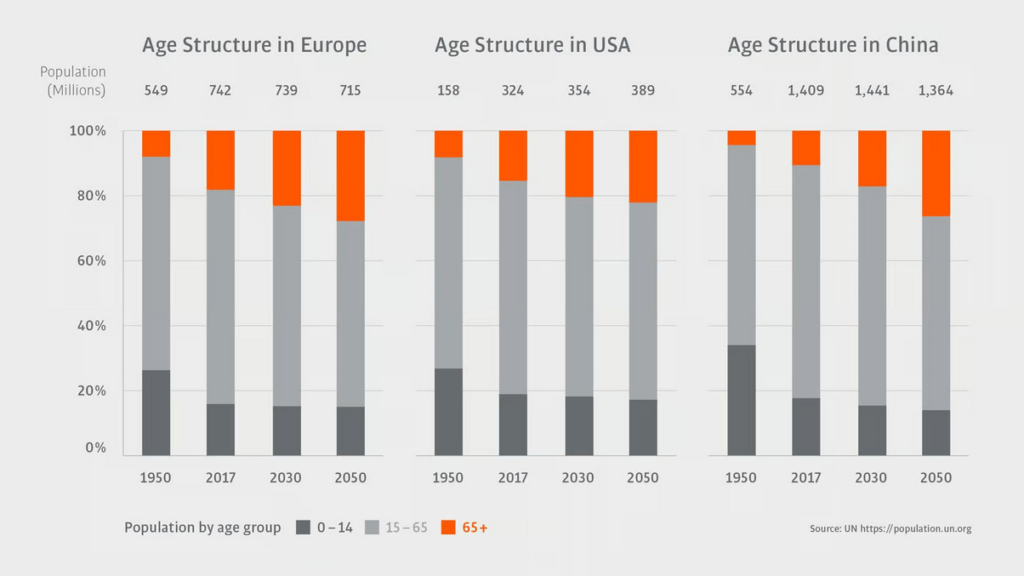
Source: UN Population Division – https://population.un.org
This infographic represents the main focus of several major trends:
1. Aging populations:
In all three regions (European, American, and Chinese) the proportion of elderly people over 65 years (yellow) has increased significantly from 1950 to the predicted figures for 2050.
2. Decreasing youth population:
The proportion of young people (0-14 years, dark gray) has decreased significantly since 1950 and is still declining.
3. Change in the working-age population:
The working-age population (15-65 years, light gray) which was at first increased, now is decreased as a percentage in all regions.
4. Regional differences:
China has the most dramatic shift; its working-age population is expected to drop significantly by 2050 which may create workforce challenges.
These demographic changes have a direct impact on the structure of the industrial workforce and thus impose serious implications for quality management.
Consequences at a Glance
Skill:
Skill Shortages: As older, more experienced workers retire and are replaced by younger, less experienced employees, there can be skill shortages in the workforce, leading to quality problems due to inadequate training.
With an aging workforce, there may be a lack of effective knowledge transfer from experienced workers to newer ones, resulting in a loss of institutional knowledge and potentially leading to quality issues.
Communication
Workforce Diversity:
An increasingly diverse workforce may bring different perspectives and approaches to the production process, which can lead to conflicts and quality problems if not managed well..
Technological Gaps:
Younger workers may be more technologically savvy, while older workers may struggle to adapt to new technologies. This technological gap can lead to quality issues if not addressed through training and support.
Job and Workplace
Workforce Mobility:
Younger generations tend to change jobs more frequently, leading to higher turnover rates. Frequent turnover can disrupt workflows, result in inconsistent processes, and impact quality.
Workplace Attitudes:
Different generations may have varying attitudes towards work, including their commitment to quality. If there is a disconnect in values and work ethic, it can affect overall product quality.
Resistance to Change:
Older workers may resist changes in production methods or quality standards, while younger workers may push for innovation. Managing these differing attitudes can be challenging and affect quality.
Training and Development Gaps:
A changing workforce may require different training and development approaches to maintain and improve production quality. Failing to invest in the necessary training can result in quality problems.
Consequences in Detail
The Skill Factor
Skill Shortages and Knowledge Gaps
As experienced workers retire, they take with them decades of accumulated knowledge and expertise.
This institutional knowledge often includes subtle aspects of production that may not be documented in formal procedures but are critical to maintaining quality. Young workers entering the workforce may have theoretical knowledge but lack the practical experience necessary to identify potential quality issues before they occur.
For example, in precision manufacturing, an experienced worker might recognize a subtle change in machine sound that indicates an impending problem, while a newer employee might miss this warning sign. This experience gap can lead to quality problems that might have been prevented with more seasoned oversight.

The UN demographic data illustrates the magnitude of this challenge. By 2050, Europe is projected to have nearly 30% of its population over age 65, compared to just 8% in 1950. In the United States, this group will grow to over 20% by 2050, while China faces the most dramatic shift—from just 5% of its population over 65 in 1950 to approximately 25% by 2050. This rapid aging of the population means manufacturing sectors in these regions will experience unprecedented rates of retirement and knowledge loss in the coming decades.
Disrupted Knowledge Transfer
The traditional model of knowledge transfer within organizations often relied on extended mentorship periods where younger workers could learn directly from more experienced colleagues. Today’s faster-paced work environments and leaner staffing models frequently don’t allow for these extended learning relationships to develop naturally.
When experienced workers leave without effectively transferring their knowledge, production teams lose critical insights into processes, troubleshooting techniques, and quality control methods. The resulting knowledge vacuum can manifest as inconsistent product quality as new workers reinvent processes that were once well understood.

Communication Challenges
Workforce Diversity and Communication Styles
Today’s workforce is more diverse than ever before, with teams composed of individuals from different cultural backgrounds, educational experiences, and generational perspectives. This diversity brings valuable innovation and creativity but can also lead to communication challenges that impact quality.
Different communication styles may result in misunderstandings about quality expectations or process requirements. For instance, some cultures may be less likely to question authority or raise potential problems, while others encourage challenging the status quo. These differences, if not properly managed, can allow quality issues to go unaddressed until they become significant problems.

Technological Proficiency Gaps
Different generations often have varying levels of comfort with technology. While younger workers may quickly adapt to new digital tools for quality monitoring and control, older workers might struggle with technological changes, leading to inconsistent implementation of quality systems.
Conversely, younger workers who are accustomed to digital interfaces might miss important physical cues in production processes that more experienced workers recognize immediately. These technological proficiency gaps can create blind spots in quality control systems that might otherwise complement each other.

Workplace Dynamics
Increased Workforce Mobility
Younger generations demonstrate greater job mobility compared to previous generations. While this mobility brings fresh perspectives into organizations, it also creates continuity challenges for quality management. When employees frequently move between companies, they may not develop the deep process understanding that comes with long-term engagement with a product or production line.
High turnover rates also disrupt continuous improvement initiatives, as teams constantly adjust to new members rather than refining existing processes. Quality systems that rely on consistent implementation and gradual refinement may struggle in environments with frequent personnel changes.

Evolving Workplace Attitudes
Different generations often bring different attitudes toward work, authority, and quality standards. Baby Boomers and Generation X workers might prioritize adherence to established procedures, while Millennials and Generation Z employees might question these procedures and seek improvements or efficiencies.
These differing attitudes can create tension in production environments where quality depends on both consistency and innovation. Finding the balance between respecting established quality processes while remaining open to improvements requires thoughtful management of intergenerational dynamics.

Resistance to Change vs. Innovation Pressure
Demographic shifts often create tension between resistance to change and pressure for innovation. Experienced workers may resist new quality approaches or technologies based on their long experience with established methods. Meanwhile, younger workers might push for innovations without fully understanding the quality implications of departing from proven processes.
This tension can manifest as quality problems when changes are implemented without adequate testing or when necessary innovations are blocked by resistance to new approaches. Organizations must carefully navigate these opposing forces to maintain quality while continuing to evolve their processes.

Training and Development Misalignment
Different demographic groups may respond to different training approaches. Traditional classroom training might work well for some employees, while others learn better through hands-on experience or digital learning platforms. When training programs fail to account for these differences, quality knowledge may not be effectively transferred across the workforce.
Additionally, training content itself may need adjustment to address different baseline knowledge levels across demographic groups. Assumptions about what employees already know can lead to critical gaps in quality-related knowledge.

Strategies for maintaining Quality
The demographic data from the UN highlights the urgency of addressing workforce transitions, particularly in manufacturing-heavy economies like China where the working-age population will shrink dramatically as a proportion of the total population.
Implement Robust Quality Knowledge Management Systems
Organizations can mitigate the impact of demographic changes by implementing comprehensive knowledge management systems that capture critical quality information before experienced employees depart.
These systems should document not just procedures but also troubleshooting approaches, quality indicators, and lessons learned from past issues.

The demographic projections for 2030 and 2050 indicate that organizations have a narrowing window to capture knowledge from experienced workers before retirement rates accelerate. In regions like Europe and China, where the 65+ population is expected to exceed 25% by 2050, this knowledge capture should be prioritized as a strategic initiative.
Create Flexible Training Programs
Training programs should accommodate different learning styles and technological comfort levels.
Blended approaches that combine traditional instruction with digital learning and hands-on practice can help bridge generational learning preferences while ensuring consistent quality knowledge.

Build Cross-Generational Teams
Intentionally structuring teams to include members from different demographic groups can foster natural knowledge transfer while bringing together complementary strengths.
Younger workers’ technological fluency combined with older workers’ experience-based insights creates a more robust quality control environment.

Develop Clear Communication Protocols
Establishing clear communication expectations and protocols can help diverse teams align around quality objectives.
These protocols should account for cultural differences in communication styles and create psychological safety for raising quality concerns regardless of one’s position in the organizational hierarchy.

Balance Stability and Innovation
Organizations need governance structures that balance the need for process stability with opportunities for innovation.
Stage-gate approaches to process changes can allow for innovation while maintaining quality controls through careful testing and validation before full implementation.

FAQ
Are quality problems inevitable with demographic changes?
Demographic changes are not the primary reason for experiencing quality problems. Indeed, the demographic transitions pose some challenges; however, the organizations that properly address these challenges through formalized knowledge transfer programs, variable training methods, and general inclusive communication strategies could survive and even improve quality standards during demographic transitions. The key lies in identifying potential problems before they affect quality and performing targeted interventions.
Which demographic change has the most significant impact on quality?
The retirement of experienced workers and the resulting loss of tacit knowledge typically has the most immediate and significant impact on quality. This “brain drain” can lead to subtle quality issues that are difficult to identify because they stem from missing knowledge that may not have been formally documented. However, the severity of impact varies by industry, with highly specialized manufacturing and craft-based industries often experiencing more pronounced effects.
How can organizations measure the impact of demographic changes on quality?
Companies can track key indicators such as:
- Defect rates before and after significant demographic shifts
- Customer complaints or returns related to quality issues
- Process variation trends
- Quality audit findings
- Knowledge retention metrics
- Training effectiveness across different demographic groups
Correlating these metrics with workforce demographic data can help to dentify specific impacts and target interventions accordingly.
Do younger workers care less about quality than older generations?
Research does not support the generalization that younger workers care less about quality. Different generations may express their commitment to quality differently.
Younger workers often emphasize innovation and efficiency improvements that can enhance quality, while older workers might focus on adherence to established quality standards and processes. Organizations benefit most when they harness both perspectives rather than assuming one generation values quality more than another.
How long does it typically take to address quality issues related to demographic changes?
The timeline varies based on the nature of the industry, the complexity of the production processes, and the organization’s preparedness.
Companies with robust knowledge management systems and succession planning may experience minimal quality disruption during demographic transitions. In contrast, those without such systems might take 6-18 months to regain previous quality levels after significant demographic shifts. Proactive planning is the most effective way to minimize this adjustment period.
What do current global demographic trends indicate about future quality challenges?
The UN population data shown in the graph reveals accelerating demographic shifts across major industrial regions. In Europe, USA, and China, the proportion of people over 65 is growing rapidly while younger populations shrink. These trends suggest that quality challenges related to demographic change will intensify over the next two decades as retirement rates increase. Organizations in China may face particularly abrupt transitions given the steep projected increase in the 65+ population between now and 2050. Companies must begin preparing now with robust knowledge management systems and cross-generational training programs to mitigate these impacts.
Can technology solve quality problems related to demographic changes?
Technology is an important tool but not a complete solution. Digital knowledge management systems, augmented reality training tools, and quality monitoring technology can help bridge knowledge gaps and support consistent quality practices across demographic groups. However, these tools must be implemented alongside human-centered approaches that address communication challenges, foster cross-generational relationships, and build a shared quality culture.
What role does leadership play in managing quality during demographic transitions?
Leadership is crucial in navigating demographic transitions without compromising quality. Leaders set the tone for how knowledge sharing is valued within the organization, how different perspectives are integrated, and how quality is prioritized.
Effective leaders create environments where diverse demographic groups can collaborate effectively around shared quality goals, provide resources for knowledge transfer and training, and hold all employees accountable to consistent quality standards regardless of age or experience level.