
A3 Method

A3 problem-solving icon showing a circular arrow cycle labeled “A3”.

What Is the A3 Method?

The A3 sheet is an effective tool from the Lean methodology, named after its paper format (420 x 297 mm). It provides a structured framework for problem-solving and communication in organizations.

The layout includes sections for problem definition, background, current state, target state, root cause analysis, countermeasures, and follow-up.

A3 Thinking promotes not only systematic problem-solving but also establishes a culture of continuous improvement (Kaizen) through clear visualization and shared understanding of complex issues.

A3 Sheet – Real-World Examples

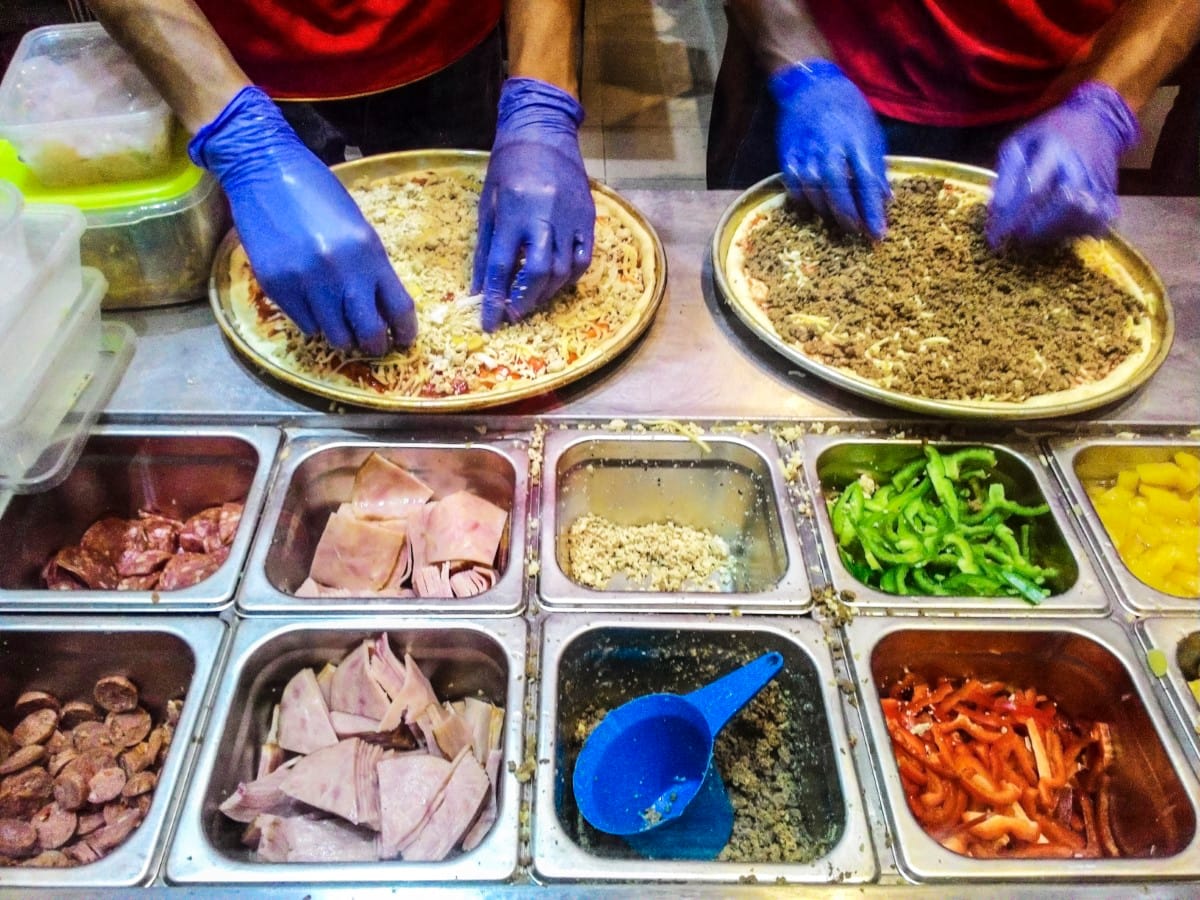
1. Pizza Production

Daily Pizzeria Operations

Complete A3 industry example for food service. Shows the 7-step PDCA methodology applied to pizza topping consistency: 35% uneven distribution caused 15% of customer complaints. Root cause analysis identified preparation process gaps, countermeasures implemented through visual standards and portion guides. Total complaint reduction: 85%.

💡 Want to create your own? Contact me for the free template.

2. Automotive / Manufacturing

Body-in-White Assembly

Complete A3 industry example for automotive manufacturing. Shows structured problem solving for weld spot failures: 8% of spots failed destructive testing, causing rework and delays. 5-Why analysis traced root cause to electrode wear patterns, countermeasures included predictive maintenance and real-time monitoring. Defect rate reduced to <1%.

💡 Want to create your own? Contact me for the free template.

3. Pharmaceutical / Life Sciences

Tablet Compression Operations

Complete A3 industry example for pharmaceutical production. Shows GMP-compliant problem solving for tablet weight variations: 3.2% OOS rate risked batch rejection and FDA Warning Letter. Root cause analysis identified granulation endpoint variability, PAT implementation and hopper redesign resolved issues. Process capability improved to Cpk >2.0.

💡 Want to create your own? Contact me for the free template.

4. Financial Services

Mortgage Processing Center

Complete A3 industry example for banking operations. Shows Lean problem solving for loan processing delays: 45-day average vs. 30-day target caused customer complaints and lost business. Value stream mapping identified documentation bottlenecks, digital workflow and parallel processing reduced time to 28 days. Customer satisfaction increased 40%.

💡 Want to create your own? Contact me for the free template.

5. Information Technology

E-Commerce Platform Operations

Complete A3 industry example for IT operations. Shows structured problem solving for system availability: 4.2 hours/month unplanned downtime caused €180K monthly revenue loss. Root cause analysis identified database connection pool exhaustion, infrastructure improvements and enhanced monitoring achieved 99.95% uptime. Annual savings: €2.1M.

💡 Want to create your own? Contact me for the free template.

Why Use the A3 Method?

A3 method helps improve quality and satisfaction by focusing on three main groups: customers, quality experts, and process owners.

For customers, it ensures product and service quality by identifying and removing defects through clear problem visuals and specific solutions.

Quality experts gain from A3’s organized approach, which gives them useful data, helps to track progress, and provides standard documentation formats, making their tasks smoother and more satisfying. The method’s focus on visual management and finding root causes gives quality professionals useful tools to show improvements and defend funding for quality projects. Because A3 is systematic, it cuts down on crisis management and recurring issues, allowing quality experts to work on long-term improvements instead of firefighting. This creates a positive cycle where better process stability boosts customer satisfaction, which then supports the efforts of quality experts and increases their job satisfaction.

When to Use the A3 Method

The A3 problem-solving method, is a structured one-page approach that guides teams through documenting the current situation, analyzing root causes, developing countermeasures, and creating an implementation plan.

When picking a problem-solving tool like A3, it is important to think about the issue’s complexity, urgency, and type:

JDI ("Just Do It")

Basic, everyday problems that one person or a small group can quickly fix without formal methods are good for just-do-it (JDI) solutions.

The JDI (Just Do It) method is ideal for straightforward issues that individuals can resolve through immediate action and common sense, without requiring formal procedures or extensive documentation

The PDCA/A3 Method helps teams to plan, implement, and check solutions in a structured way, for internal problems that need order but are not pressing.

The PDCA (Plan-Do-Check-Act) cycle is a continuous improvement method that guides teams through a systematic process of planning actions, implementing changes, checking results, and acting on lessons learned for ongoing improvements.

The PDCA/A3 Method helps teams to plan, implement, and check solutions in a structured way, for internal problems that need order but are not pressing.

The A3 Method, named after the paper size traditionally used for the report, is a structured problem-solving approach that tells the complete story of a problem on a single page, forcing concise documentation while walking through background information, current conditions, root cause analysis, proposed countermeasures, and follow-up actions.

The 8D (Eight Disciplines) process is specifically designed for complex quality issues and customer complaints, requiring a thorough, documented approach that includes containment actions, root cause analysis, and verification of corrective measures.

Six Sigma (6σ) represents the most rigorous and resource-intensive methodology, typically reserved for chronic, high-impact problems that require statistical analysis and long-term process improvement to achieve near-perfect quality levels.

Additional Use Cases for the A3 Method

The A3 adaptability makes it beside problem solving the perfect instrument for many additional uses like using it as a framework, planning, decision-making or innovation.

Problem Solving

A3 is a method for solving problems that helps teams use a clear approach to deal with issues.

It starts with figuring out what the problem is, then looks at the current situation, finds root causes using tools like 5-Why and fishbone diagrams, and makes solutions. The one-page setup helps to keep things clear and to the point, while the structured method makes sure, thats teams fully grasp problems before trying to fix them.

This ends up providing organizations the definition of what is broken, or what could be made better resulting in effective planning and execution becoming a necessity — to aim all the efforts towards effective results.ess more efficient and effective.

Framework

 As a framework, A3 thinking helps break down tricky issues into simpler parts using a structured and data-driven method. It makes teams carefully understand the real issues by needing them to go to the gemba (the actual place), collect data, and analyze the root causes before rushing into solutions.

This careful approach often shows that what seems to be the problem is just a sign of deeper issues.

Planning

A3 as a planning tool provides teams with a visual guide that ties them together around shared objectives and actions to be taken in preparation.

It clarifies probable obstacles, helps to split difficult projects into smaller pieces, and defines precise success criteria. Since the plan is on one sheet, A3 promotes targeted communication and helps to maintain the strategic emphasis during implementation.

Decision Making

For decision-making, A3 thinking makes sure, that choices are made based on data and thorough analysis and not just based on guesses or instincts.

Teams are asked to gather data, review several choices, and evaluate possible outcomes before choosing a direction. This approach reduces bias, facilitates objective evaluation, and produces an unambiguous record of choices for learning.

Innovation

A3 in innovation provides the structure for methodically developing and evaluating fresh ideas in innovation. It encourages originality while keeping a sharp eye on sensible application and quantifiable results.

The A3 format also makes sharing and scaling successful innovations across an organization easier as it clearly documents the process and results.

PDCA as the Foundation for A3 Thinking

The A3 format matches the Plan-Do-Check-Act (PDCA) cycle in its setup and design, linking continuous improvement ideas to solving problems. The PDCA cycle, also known as the Deming cycle or Deming wheel, is a four-step iterative approach to continuous improvement:

PLAN – Identify and analyze the problem, gather data, and develop a solution plan.
DO – Implement the planned solution on a small scale as a test.
CHECK – Measure and analyze the results to see if the solution achieved the desired outcome.
ACT – If successful, implement the solution fully and standardize it; if not, begin the cycle again with new learnings.

Therefore this cycle creates a perfect basis for A3 thinking to approach improvement while building in learning through each iteration.

The A3 format matches the Plan-Do-Check-Act (PDCA) cycle in its setup and design, linking continuous improvement ideas to solving problems:

The left side of the A3 is for the “PLAN” step, where teams outline the problem, assess the current state, set goals, and create solutions. This part includes background info, current conditions, root cause analysis and suggested solutions.

The Plan phase is given a lot of focus because good planning is key for success. Spending time to understand the problem and its main causes increases the chances the solution will work well. There is a saying, “a problem clearly defined is a problem partly solved.” Taking this time for planning helps prevent quickly putting solutions into action that might not tackle the real issues.

The top right part shows the “DO” step, where the planned actions are carried out. This section describes the specific solutions which are applied and the steps taken to tackle the identified issues.

Below that is the “CHECK” step, which is about verifying results and assessing the success of the actions taken. This part usually contains measurements, metrics, and real outcomes compared to expected results.

The bottom right features the “ACT” step, where teams make successful changes standard practice and figure out next steps. This section discusses what succeeded, what failed, and what needs changes for ongoing improvement, finalizing the cycle and possibly starting a new one if necessary.

How to Conduct an A3 Method Analysis

The Important Plan-Phase of A3

The Plan-Phase as the most important phage of the A3 method goes step by step from finding a problem to solving it. It starts by showing the difference between where things are now and where they should be. Then, it breaks down tough problems into smaller parts. This breakdown happens at both a big picture level and a detailed level, helping to pinpoint the problem areas accurately.

The method uses visual cues (red stars) to mark specific points of occurrence (PoO), making sure teams aim their improvement efforts where they can do the most good. This organized approach stops teams from jumping to solutions before they fully grasp the problem’s extent and main causes.

Each analysis step builds on the last, creating a straightforward route from recognizing the problem to finding its root causes and setting goals. This clear process helps keep teams focused and prevents them from getting lost in complicated issues.

1 - Clarify the Problem

The A3 Clarification phase is an important first step in solving problems. It clarifies the difference between where things are now and where they should be. In this phase, problem solvers need to see and explain the gap between “what should be” (the standard) and “what is” (the current situation). This helps to align their efforts with the broader goals of the organization and prevents them from rushing to solutions without grasping the full problem.

During this phase, teams can use a visual framework, which helps them answer three main questions:
1. What is the main goal related to this problem?
2. What is expected to happen (the standard)?
3. What is happening right now (current situation)?

By making these points clear and visual, teams can comprehend the real gap that needs fixing and make sure their problem-solving focuses on important issues that support the organization’s goals.

1.1 - Clarify the Ultimate Goal

What makes this Ultimate Goal work well is how it spreads throughout the organization into clearer goals and duties.

ULTIMATE GOAL: “To provide customers with best products at competitive prices with quick and reliable service”

MY JOB’S PURPOSE: “To meet customer expectations and orders”

MY WORK & RESPONSIBILITIES: “To execute production plans”

This goal effectively balances multiple critical aspects of value delivery:

    • Product Quality (“defect-free high-value products”)
    • Cost Value (“competitive prices”)
    • Service Performance (“quick and reliable service”)
    • Customer Focus (“provide customers”)

This creates a clear line of sight from the ultimate customer-focused goal through to daily operational activities in the organisation. 

1.2 - Clarify the Standard of Work

The work standard is the performance level or goal that an organization wants to achieve regularly. It should be clear, measurable, and well-defined so that differences between current performance and the standard can be easily found and measured. A good standard sets clear expectations for quality, time, cost, and safety that fit with the organization’s main objectives.

The standard measures the current performance and sets a clear goal for improvements. It should be realistic, but tough, based on what customers want, business needs, and what the operations can handle. When documented and shared well, the standard helps create consistent operations, training, and ongoing improvement efforts.


Most importantly, the standard needs to be kept up to date as processes get better, so it continues to encourage high performance instead of becoming an old reference. It shows “what good looks like” and is the basis for measuring all process changes.

1.3 - Clarify the Current Situation

The current A3 problem-solving situation shows the present performance status.  A clear measurement of the current state allows for a definite assessment of the performance gap.

What makes this current situation description effective is that it’s:

    1. Specific and measurable – using both percentages and actual numbers
    2. Directly comparable to the standard – using the same metrics
    3. Fact-based – avoiding assumptions or opinions
    4. Visual – using both text and graphical representation to show the gap
    5. Problem-focused – highlighting that x products per day are defective

By clearly defining the current situation, an organization can see exactly how far they are from their desired standard (the xx% gap), which helps drive focused improvement efforts. This clarity is essential for understanding the true scope of the problem and establishing a baseline for measuring improvement.

1.4 - Visualize the gap between the “Current Situation” and the “Standard”

A graph effectively demonstrates when and how much the operation deviates from the desired standard, making it easier to identify patterns and focus improvement efforts where they’re most needed.

This visual representation helps:

    • Track performance trends over time
    • Identify specific months where performance declined
    • Show the magnitude of the problem (the gap between actual and standard)
    • Highlight the consistency (or inconsistency) of service
    • Make the problem tangible and visible to all stakeholders

1.5 - Containment

Containment in an A3 means the quick temporary actions set to safeguard customers and stakeholders from a problem’s effects while a lasting solution is made. These temporary steps aim to lessen or stop immediate bad effects, but they are not the ultimate solution.

Containment actions may involve:

    • Extra inspection steps
    • Manual work arounds
    • More supervision
    • Frequent quality checks
    • Short-term process changes

But it is important to understand that containment measures usually:

    • Need more resources or effort
    • Are not a long-term fix
    • Focus on symptoms, not root issues
    • Offer quick safety for customers/stakeholders
    • Give time for proper problem-solving

Within the containment section of an A3 sheet what temporary measures are happening, who is in charge, and how to check if they are working until permanent solutions can be put in place have to be clearly described. This ensures openness and keeps attention on finding lasting solutions instead of letting temporary fixes turn into permanent ones.

2 -Breakdown the Problem

2.1. Breakdown the Problem

The objective of the Breaking-Down-The Problem part of an A3 sheet is to take a big problem and divide it into smaller parts in a clear way. This helps to find the specific area where the problem appears and where actions for improvement should be directed.

When breaking down, focus on the What, Where, When, and Who for each small problem, and avoid talking about Why (the root causes) at this time. This method:

    • Keeps teams from feeling confused by the problem’s size
    • Allows for better and more targeted problem-solving
    • Helps decide which parts need urgent focus
    • Aids in better use of resources to fix the issue
    • Produces a clear visual layout of how problems connect

For example, if the main problem is “low customer satisfaction,” it can split into areas like “long wait times,” “order accuracy,” and “food quality.” These can then be further divided into more specific problems until you find a clear issue to tackle. Each breakdown should be clearer and easier to measure than the last one.

Because always remember:  If you can’t describe it, you can’t solve it!

2.2 - Locate Point of Occurrence

The Point of Occurrence (PoO) identification uses a clear three-step method to find where problems happen.

    • First, we make a list of all possible breakdown types related to the larger issue, giving us a full view of potential problem areas.
    • Next, pick the most likely classifications to explore and measure and use data to guide your focus.
    • Lastly, identify the specific PoO at the process work element level by reviewing standard work steps.

This structured method allows to go deeper than just to solve symptoms. This helps to find the real starting point of the problem in the process.

3 - Set the Target

Having clear, quantifiable goals demonstrates a strong commitment to setting a good target.

Three key components should be explicitly stated in the objective statement:

    • What will be improved,
    • How much improvement is anticipated, and
    • When it will be completed.

To ensure that the aim addresses the underlying cause rather than just the symptoms, this target should be derived directly from the primary issue and the location where it occurs. The goal should be both explicit enough to monitor progress and challenging enough to inspire genuine change.

For example, “Topping weight variation will be cut down from ±30g to ±10g per pizza by the end of Q2, checked through hourly quality control sampling.” This goal could be set after our pizza production line identified uneven topping distribution as our main issue and identified it at the topping application station. This goal makes it simple to measure and take action by explicitly stating what (topping weight variation), how much (between ±30g and ±10g), and when (end of Q2).

4 - Analyze the Root Cause

4.1. - Tools and Methods

Root cause analysis in A3 thinking uses a clear method starting at the Point of Occurrence. Here, problem solving teams look at possible causes without bias or expectations. The steps use various analytical methods along with direct observations to find real root causes:

Ishikawa-/Fishbone-Diagram

Fishbone diagrams, or Ishikawa diagrams, are useful visual tools for generating and organizing possible causes. By examining six main areas—Man, Machine, Method, Material, Measurement, and Environment—teams can discover and outline all factors contributing to the issue. 

The 5-Why technique helps find root causes by repeatedly asking “Why?” each time a cause is found. This ongoing questioning ensures we do not settle for surface-level symptoms.

In a pizza situation, we might ask, “Why is the topping weight not consistent?” and continue to explore questions about portioning techniques, tool calibration, and training until we identify the main cause.

A histogram is a useful tool for visual analysis to show, how often data occurs with vertical bars. This helps teams to spot patterns, differences, and possible problems in processes. The statistical tool sorts numerical data into groups or intervals, which makes it simple to see where most values are and find any odd patterns or outliers.

A Correlation or Scatter Diagram is a type of graph which shows the link between two factors by placing pairs of numbers on a graph. Each dot on the graph stands for two values. The arrangement of these dots helps to show if there is a positive link (when one number goes up, so does the other), a negative link (when one number goes up, the other goes down), or no link.

A histogram is a useful tool for visual analysis to show, how often data occurs with vertical bars. This helps teams to spot patterns, differences, and possible problems in processes. The statistical tool sorts numerical data into groups or intervals, which makes it simple to see where most values are and find any odd patterns or outliers.

Direct observation merges two important lean ideas: Genchi Genbutsu and Gemba walks.

Genchi Genbutsu looks closely at a specific issue at the source, like spending time on the topping station’s variability, while Gemba walks provide a broader understanding through regular observation of the workplace.

Both methods are important for collecting factual evidence instead of depending on reports or assumptions. At our pizza topping station, this involves watching operators, measuring variations, checking equipment, and confirming procedures. This practical investigation tests or supports our findings from the Fishbone and 5-Why analyses, ensuring our root cause analysis relies on factual information rather than just theories.

4.2. Which Root Cause Analysis Tool to Use

Choosing quality management tools for finding the root of problems should depend on how complicated and what kind of problem it is. If possible causes are known already from experience, the 5-Why method is often enough to identify and confirm the root cause.

Teams can use an Ishikawa diagram to investigate possible causes for simpler problems where the root cause is unknown and subsequently utilize either the 5-Why approach or Fault Tree Analysis for validation of the cause. In more complex situations when the causes are unknown, a combination of the 5-Why and Ishikawa approaches might assist to identify possible causes prior to more thorough investigation to validate them.

When facing problems with many factors and unknown causes, it is useful to first apply statistical methods to find possible correlations and patterns. These results can then be examined further with the 5-Why technique or Fault Tree Analysis to establish and verify the real root cause. This organized method ensures that teams apply the best tools based on the complexity and nature of the problem.

4.3. - Root Cause Types

When looking at problems, the difference between occurrence and escape root causes is very important in quality control.

Occurrence looks at where the problem started – finding the local cause and putting in place steps to prevent it from happening again. This could mean to check manufacturing methods, how workers are trained, or the quality of materials where problems first happen.

Escape analysis looks at why existing detection systems did not find the issue before it got to the next step or to the customer. It investigates how defects moved through the system without detection and reviews failures in checks, quality procedures, or testing methods. Knowing escape root causes is important, because it helps to improve detection techniques and fix weaknesses in quality control systems.

4.4. Root Cause Verification

“Turn It On…Turn It Off”

Goal:

“By doing tests (or simulations), check if the real cause is found. You should be able to make the problem happen and stop it by adding and taking away the cause.”

Key concept:

Recreate the problem by adding the suspected cause and then fixing it by taking that cause away. This “on/off” method helps make sure the real cause is identified.

The testing process is very important in root cause analysis. It involves checking the suspected cause through real tests or simulations to make sure it really explains and controls the issue. This method helps confirm the findings of the root cause analysis before making final solutions.

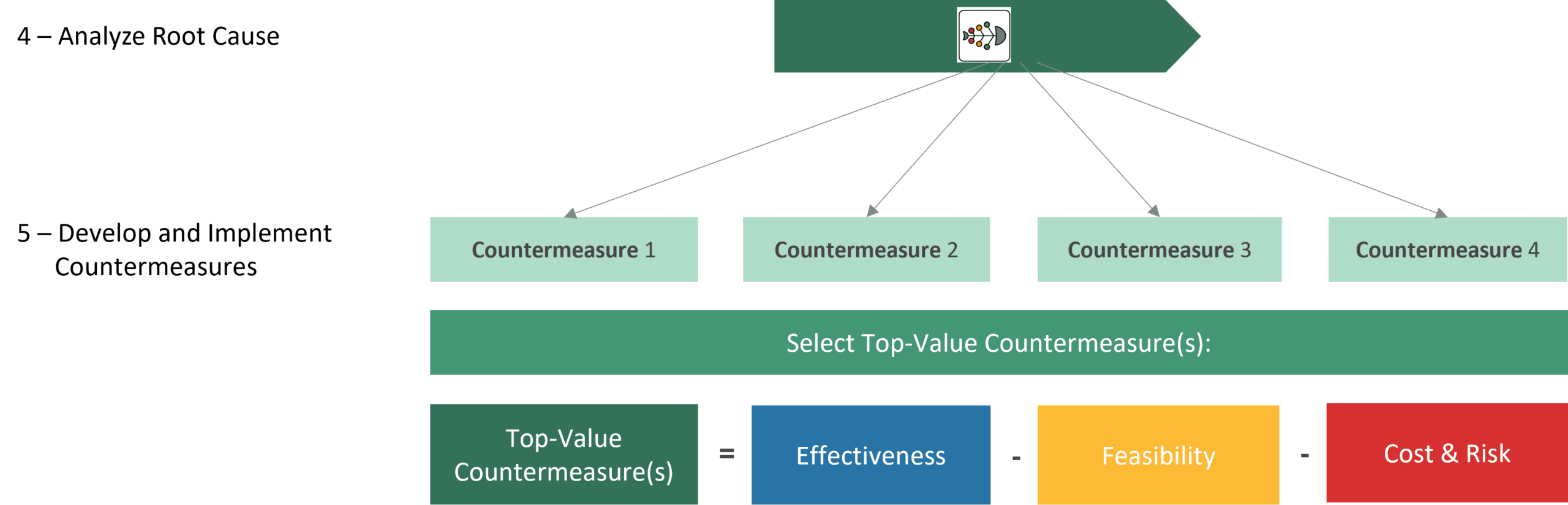
5 - Develop Countermeasures

Creating countermeasures in A3 problem-solving is a careful task with a clear four-step process.

    • Step 1: It starts with coming up with lots of possible solutions, fostering creative ideas without limits.
    • Step 2: Next, the second step is looking at these ideas to choose the ones with the most value, taking into account both their effectiveness and possible risks.
    • Step 3: The third step is about sharing information and gaining support, making sure everyone involved understands and backs the chosen solutions.
    • Step 4: The last step is to make a detailed action plan that turns these countermeasures into specific tasks with assigned roles and deadlines. countermeasures are carried out effectively.

5.1. Develop Possible Countermeasures

The first part of making countermeasures is to list many possible solutions to stop the root problem. This brainstorming stage needs an open approach where any idea is okay and no immediate judgment happens. A key part is to look for solutions beyond the easy ones by figuring out what can be changed and asking others for their thoughts or past experiences with similar problems

5.2. Evaluate Countermeasures

The evaluation of potential countermeasures is a systematic process that assesses each solution against key criteria to identify those with the highest value-added impact.

This evaluation focuses on three main areas:

    • Effectiveness whether it truly eliminates the root cause and meets targets,
    • Feasibility considering cost, time, and manpower requirements, and
    • Risk assessment examining impacts on safety, quality, workability, and following processes.

Using an evaluation matrix helps objectively compare different options by rating each solution against these defined factors:

For our pizza topping variation example, we might evaluate countermeasures using this structured approach: automated portioning equipment might rate highly for effectiveness but poorly on cost/manpower, while standardized work procedures might show balanced ratings across all criteria.

The evaluation matrix helps visualize these trade-offs, rating each option as Very Good (3), Good (2), Acceptable (1), or Not Applicabel (0) across factors like expected results, implementation cost, technical difficulty, quality impact, safety considerations, and overall feasibility. This systematic evaluation ensures that those countermeasures are selected, which not only solve the problem, but are also practical to implement and maintain.

5.3. Communicate Countermeasures and Build Consens

Communication and Consens building on the countermeasures is an important step that helps make sure countermeasures work by including all needed people in the decision-making. This step starts with forming a group that includes different viewpoints from various parts of the organization—such as workers, supervisors, maintenance, and quality teams. A clear way to communicate includes to set up formal meetings in order to present the analysis, suggested solutions and expected effects.

5.4. Develop a clear and detailed Action-plan

The last step in making countermeasures is to create a clear action plan that answers the four W’s: Who, What, Where, and When. This planning makes sure all parts of implementation are clear and doable. The action plan should explain the roles and duties of everyone and every department involved, and set a clear schedule for activities.

The plan should be shown visually, like a Gantt chart or a timeline, to display the order of activities, relationships and key points. This visual form helps everyone understand their roles and timing, while it provides a clear way to check progress and maintain responsibility.

6 - Implement Countermeasures

Implemenation of Countermeasures in A3 problem-solving needs a mix of quick action and continuous effort after getting everyone on the same page (Nemawashi). During the implementation stage, the focus is on dedicated actions while regularly checking progress through “on-the-floor” meetings at progress boards, which is like the jishuken room idea.

Communication is very important during implementation. It’s necessary to share information clearly with all involved parties through frequent updates and consultations. It’s especially crucial to quickly inform everyone about any issues or difficulties faced, which allows for fast responses and changes. Backup plans for unexpected problems or events help the team to deal with implementation issues.

A strong implementation mindset is vital for success. Accepting planned trial and error is part of the journey, and the team must be ready to revisit previous steps if issues arise. Persistence is important: if results are not as expected, the team should explore different countermeasure options rather than give up. This requires a culture that supports continuous effort and learning from difficulties.

7 - Evaluate Results and Processes

7.1 - Evaluate Results

Evaluating results in A3 problem-solving needs a detailed look from three main perspectives: customer perspective, the problem-solving process and your team’s view. This evaluation must be based on data and shared openly with everyone, who is involved in the improvement effort.

The evaluation starts with a straightforward comparison of results to the original target by using visual aids like charts or graphs to clearly show standards and achievements.

The analysis should answer key questions concerning gathering of data:

    • what data is needed,
    • where it comes from,
    • how long the measurement period is for reliable insights, and
    • who will gather and summarize this data.

It’s important to understand why some targets are met and others are not. If targets are reached, record what worked for future use. If they are not reached, investigate the reasons for the shortfall and decide if further actions are necessary. This detailed evaluation helps to ensure improvements last and provides useful insights for future problem-solving tasks.

7.2 - Evaluate Processes

The evaluation of processes in A3 problem-solving requires a deeper reflection beyond just examining results. This analysis focuses on understanding both, how and why the improvements worked or did not work.

The evaluation process addresses three fundamental questions:
1. Did we accurately identify and analyze the true root cause of the problem?
2. Did we thoroughly follow all 8 steps of the problem-solving process?
3. Which countermeasures proved most effective and why?

This reflection on the process itself, not just the results, provides valuable learning opportunities and insights, which can be applied to future improvement efforts. Organizational knowledge is built and problem-solving capabilities are strengthened for future challenges by sharing these process learnings with all stakeholders.

7.3 - Confirm Positive and Negative Results

To confirm results in A3 problem-solving, it is important to evaluate both positive and negative outcomes of the changes. This thorough review helps to grasp the complete effect of efforts to improve, beyond just meeting the target.

Both aspects of results should be investigated:

    • Positive Outcomes:
      • Improvements directly related to our goal (main advantages)
      • Extra benefits, which were intially not intented. For instance, in the case with pizza toppings, while the goal of consistent portions (main aim) was reached, but also less waste and faster production is observed as extra positive outcomes.
    • Negative Outcomes:
      • Any unexpected issues or new problems that arose
      • More costs or need for resources
        For example, even though the new equipment for portioning improved consistency, it might lead to more maintenance needs or higher costs to operate.

This balanced review supports to:

1. See the full effect of our improvements
2. Decide whether the benefits surpass any downsides
3. Spot areas that require more focus
4. Gain useful insights for future projects
5. Make smart choices about standardizing the changes

It is important to record and communicate both positive and negative results with all stakeholders in order to maintain clear communication and shared learning from the improvement efforts.

8 - Standardize successful processes

The Standardization Process in A3 problem-solving is an important last step that helps make successful changes a regular part of operations. This process includes three main stages:

1. Setting New Standards:

Once the successful results are confirmed, the improved method becomes the new standard operating procedure. This means clearly writing down the new methods and rules.

2. Sharing Standards (YOKOTEN):

YOKOTEN is about spreading successful changes across the organization. This means:

        • Sharing the new standards with other production areas or sites
        • Communicating lessons and best methods
        • Training other teams on new ways of working
        • Modifying the solutions for similar tasks in other areas

3. Beginning the Next KAIZEN:

Standardization is not the end, but a new start in the cycle of continuous improvement:

        • Use the new standard as a starting point for more improvements
        • Find new chances for betterment
        • Use what was learned from the last improvement efforts
        • Start the next round of KAIZEN work

This loop of standardization, sharing, and ongoing improvement makes sure, that gains are secured while also laying the groundwork for future improvements. This makes improvement a steady and lasting process, not just a one-off event.

8.1 - Set successful processes as new standard

Making successful processes the new normal is an important action that guarantees improvements can be repeated by anyone, anytime, without waste, inconsistency, or excess strain. The process of standardization needs to be straightforward, easy to access, and recorded in various supporting formats:

Graphic showing standardisation methods around an A3 symbol, including forms, checklists, manuals, and flow-charts.
Manual
  • Detailed written procedures and specifications
  • Step-by-step instructions for all processes
  • Clear explanations of critical points
  • Training requirements and guidelines
  • Standardized documentation templates
  • Data collection sheets
  • Quality check records
  • Performance tracking forms
  • Process verification steps
  • Equipment setup requirements
  • Quality control points
  • Safety checks and precautions
  • Visual process maps
  • Decision points clearly marked
  • Process sequences
  • Responsibility transitions

8.2 - Share the new Standard (YOKOTEN)

YOKOTEN, or horizontal deployment of standards, is a critical practice in lean management that ensures successful improvements are effectively shared across the organization. This sharing process takes place through three main channels:

Diagram illustrating three methods of sharing standards: meetings for formal presentations, shift-to-shift communication for direct handover, and documentation distribution for access to SOPs and training materials, centered around an A3 icon.
Shift-to-Shift Communication
  • Direct handover between opposite shifts
  • Sharing practical implementation experiences
  • Discussing challenges and solutions
  • Ensuring consistency across different work periods
  • Standardized documentation templates
  • Data collection sheets
  • Quality check records
  • Performance tracking forms
  • Hard copy or Electronic
  • Standard operating procedures
  • Training materials
  • Best practice guides
  • Visual aids and reference materials

YOKOTEN ensures that successful improvements don’t remain isolated but benefit the entire organization. This systematic sharing of knowledge and best practices helps:

    • Prevent reinventing solutions
    • Accelerate improvement across different areas
    • Maintain consistency in operations
    • Build organizational knowledge
    • Create opportunities for further enhancement through feedback from different teams

8.3 - Start a New Round of Kaizen

Starting a New Round of Kaizen shows that the journey of continuous improvement goes on. While standardization helps to keep and fix current improvements, it is important to see that this is not the final stop but just a new start. The next Kaizen round expands on these set standards to reach better performance levels.

Key aspects of starting a new Kaizen round include:

1. Use Current Standards as Baseline

Adopting the newly standardized process as your cornerstone is the first step towards achieving operational excellence. By laying this foundation, you provide a solid base from which to measure performance metrics today and determine your actual baseline.

Once you have accurate measurements, you can systematically identify areas that could use improvement, starting a never-ending cycle of improvement that builds on your framework.

2. Apply Previous Learnings

Use insights gained from the completed improvement cycle Leverage successful problem-solving approaches Avoid repeating unsuccessful strategies

3. Set New Challenges

Establish more ambitious targets Identify next-level improvements Address secondary problems identified during previous Kaizen.

4. Maintain Momentum

Keep improvement teams engaged Celebrate previous successes Build on established collaboration patterns

Benefits of the A3 Method

Clarity and Focus

The A3 Sheet is good at showing the problem and how to fix it clearly. It organizes information neatly, getting rid of extra details and simplifying complicated issues. This makes it easier for stakeholders, like team members or decision-makers, to quickly see the main problem and understand the solutions. This shared understanding helps to speed up the decision-making process.

The A3 Sheet focuses on visual representation, which helps with understanding. By using charts, graphs, and diagrams, complicated information becomes simple visuals. This clarity helps to clearly explain the problem and solutions. It also caters to different learning styles in the team. The visual part of the A3 Sheet makes the problem-solving process more interesting and easier to remember.

A key strength of the A3 Sheet is its role in promoting a culture of ongoing improvement and learning among teams. By recording the process of solving problems, which covers analysis of current situations, finding root causes, and applying solutions, the A3 Sheet supports reflection. This record serves as a helpful tool for teams to review past experiences, adjust strategies, and gradually improve their problem-solving methods, encouraging a culture of continuous development and flexibility.

Limitations of the A3 Method

Space Constraints

The main drawback of the A3 Sheet is its size, which limits the information that can fit on it. Although the brief format helps with clarity, it can create difficulties when addressing complicated issues that require thorough analysis and detailed notes. Teams may struggle to decide what information is most important, which could mean to miss out on important details, which are needed for a full grasp of the problem or how to solve it.

Complex issues can be too much for the A3 Sheet to handle properly. When problems are complicated or have many linked factors, teams may struggle to fit all the details into the small space available. This shortcoming might result in oversimplifying the issue, which can cause important details to be missed that are essential for fully understanding the problem or the success of suggested solutions.

The A3 Sheet is useful, but using it well needs some skill in A3 Thinking and problem-solving. Teams might face difficulties if members lack training in these methods. Skills in tackling problems systematically, doing root cause analysis, and making clear A3 documents show why continuous training is important. If not used properly, the A3 Sheet may not reach its full potential, which can reduce its ability to promote real improvements.

A3 Method Best Practices

A3 Sheet best practices diagram showing simplicity, visual aids, and iterative improvement with icons for highlighting key information, using charts, and applying lessons learned.

Simplicity Matters

Keep it simple is important with problem-solving. It is crucial to highlight the key information and not get lost in unneeded details, that may confuse stakeholders.

By breaking down complicated issues into straightforward points, teams make sure the main message is easy to understand. This focus on simplicity helps with understanding and encourages engagement, as stakeholders can swiftly understand the main parts of the problem and the suggested solutions.

Visual Aids

Using the A3 Sheet well needs the use of visual aids. Adding charts, graphs, and diagrams improves understanding and highlights important details.

Visuals help make information easier to grasp and cater to various learning styles in the group. Good visuals can express complicated connections and trends more clearly than just words. By using visual aids wisely, the A3 Sheet becomes a strong and lasting tool for sharing information and insights.

Iterative Approach

The A3 Sheet works best when seen as a document that changes with the situation. Taking an iterative approach shows that solving problems is a changing process. As new information comes up or as the team puts solutions into action, the A3 Sheet needs to be revised.

This adaptability lets teams respond to new conditions, apply lessons learned, and improve their plans over time. By adopting an iterative mindset, teams keep the A3 Sheet useful and relevant during their ongoing improvement efforts.

A3 Method Example: Pizza Topping Consistency

Problem

Inconsistent Pizza Topping Distribution

1 - Clarify the Problem

1.1 - Clarify the Ultimate Goal

What makes this Ultimate Goal work well is how it spreads throughout the organization into clearer goals and duties.

Ultimate Goal:

“To provide customers with delicious, fresh pizzas at competitive prices with quick and reliable service”

My Job’s Purpose:

“To meet customer dining expectations and orders”

My Work &

“To execute food preparation and cooking plans”

 This goal effectively balances multiple critical aspects of value delivery:

    • Product Quality (“delicious, fresh pizzas”)
    • Cost Value (“competitive prices”)
    • Service Performance (“quick and reliable service”)
    • Customer Focus (“provide customers”)

Achieving this goal requires ensuring that each pizza has consistent topping distribution, meeting both quality expectations and operational efficiency.

1.2 - Clarify the Standard of Work

Current work standards dictate that:

    • 100% of pizzas must follow standardized recipes.

    • Topping coverage must be at least 95% of the pizza surface.

    • Ingredient amounts must be measured accurately to ensure uniformity.

    • Cheese, sauce, and toppings must be evenly distributed.

Food safety and process quality include:

    • Maintaining proper refrigeration temperatures (below 40°F/4°C).

    • Cleaning schedules (every 4 hours for surfaces).

    • Personal hygiene rules (handwashing every 30 minutes or after handling different ingredients).

1.3 - Clarify the Current Situation

Customer complaints and quality audits reveal:

    • 35% of pizzas show uneven topping distribution.

    • 20% have excessive or insufficient toppings.

    • 15% of customer complaints are about topping inconsistency.

    • Production speed variations contribute to uneven application.

1.4 - Visualize the gap between the “Current Situation” and the “Standard”

A time-series graph of topping quality audits from August to November shows:

    • Standard compliance rate target: 95%.

    • Actual compliance rate: 65%-80% (fluctuating over months).

    • Biggest inconsistencies occurring during peak hours.

The time-series graph visualizes the topping compliance rate from August to November, highlighting both the actual compliance rate and the drop in compliance during peak hours, compared against the standard target (95%).Situation shows actual delivery delays fluctuating between 20-25 minutes (plotted line varying between 0.2-0.4 on the graph) from August to November. The gap becomes particularly evident in November, where there’s a significant spike in delivery delays, creating a clear visual representation of how far the operation is from meeting its standard.

1.5 - Containment

Immediate short-term actions:

    • Train staff on portioning standards.

    • Implement manual topping weight checks every 20 pizzas.

    • Adjust workflow layout for better portioning control.

2 -Breakdown the Problem

2.1. Breakdown the Problem

Problem Components:

  1. Manual Portioning Process
    • Inconsistent measuring techniques
    • Operator variability
    • Lack of standardized tools

2. Work Environment

    • Poor lighting at topping station
    • Cramped workspace
    • High-pressure during peak hours

3. Quality Control

    • Infrequent weight checks
    • No visual guides for portion sizes
    • Delayed feedback on variations

2.2 - Locate Point of Occurrence

In a pizza making process, look at where problems might happen – from making the dough to putting the pizza in boxes. Then measure and study important problems like uneven topping or baking issues by checking data at each step:

If there are weirdly shaped pizzas at the end, check back through the process – starting from the oven, then the toppings, and back to the dough stretching – in order to find where the problems start. If the dough is fine after stretching, but gets messed up during topping, the issue is at the topping stage.

Point of Occurrence:

Topping Station #2, Production Line 1

This method helps to fix issues directly at that point, like changing how toppings are added, instead of trying to fix the problems after baking or making changes at later steps.

3 - Set the Target

Primary Target

“Topping weight variation will be cut down from ±30g to ±10g per pizza by the end of Q2, checked through hourly quality control sampling.”

This goal could be set after our pizza production line identified uneven topping distribution as our main issue and identified it at the topping application station. This goal makes it simple to measure and take action by explicitly stating what (topping weight variation), how much (between ±30g and ±10g), and when (end of Q2).

Supporting Targets:

    • Implement standardized portioning tools
    • Establish hourly quality control sampling
    • Achieve 90% operator consistency in portion sizing
    • Reduce customer complaints by 50%

4 - Analyze the Root Cause

4.1. - Apply Tools and Methods

As the problem is to not to complex and the point of Occurence is known, the Zero Defect Pizza team decides to apply the 5-Why analysis:

    • Why are toppings inconsistent?
      • Because portions vary between operators
    • Why do portions vary?
      • Because measuring methods aren’t standardized
    • Why aren’t methods standardized?
      • Because proper portioning tools aren’t available
    • Why aren’t proper tools available?
      • Because investment in equipment wasn’t prioritized
    • Why wasn’t it prioritized?
      • Because impact on quality wasn’t quantified

Main Root Cause Analysis:

1st Why: Why are pizzas coming cold? – Slow delivery and uneven preparation.
2nd Why: Why are deliveries slow? – Drivers often face delays from traffic or unclear paths.
3rd Why: Why are drivers not using best routes? – No real-time navigation help and bad teamwork between kitchen and delivery staff.
4th Why: Why is the kitchen not working with delivery drivers? – No communication system for when pizzas are done, causing pick-up delays.

Main Root Cause:

Bad teamwork between kitchen and drivers, along with poor route planning.

4.4. Root Cause Verification

Verified Root Causes:

    1. Lack of standardized portioning equipment
    2. Insufficient operator training
    3. Inadequate quality control procedures
    4. Poor workspace organization

5 - Develop Countermeasures

5.1. Develop Possible Countermeasures

It’s important to the Zero Defect Pizza Team not to ignore any ideas now because of worries about costs or how hard they might be to put in place. Those concerns will be looked at later when evaluating options.

In the case about pizza toppings, the team identifies some possible countermeasures:

    • use new tools for portioning,
    • change the layout of the workstation,
    • create standard work methods,
    • add visual aids for portion sizes,
    • change how ingredients are prepared,
    • improve training programs for workers,
    • use automatic portioning machines, or
    • set up regular calibration checks.

5.2. Evaluate Countermeasures

For the pizza topping variation the problem solving team evaluates countermeasures using this structured approach:

  • automated portioning equipment might rate highly for effectiveness but poorly on cost/manpower,
  • while standardized work procedures might show balanced ratings across all criteria.

Using an evaluation matrix the team objectively can compare different options by rating each solution against these defined factors.

5.3. Communicate Countermeasures and Build Consens

For our pizza topping change-up case, the Zero Defect Pizza team gets together people from production, quality check, maintenance, and management. The first meeting will share findings from the root cause analysis and suggested countermeasures. Everyone is encourage to provide input based on what they know.

Selected Solutions:

    1. Install calibrated portion control equipment
    2. Implement standardized work procedures
    3. Reorganize topping station layout
    4. Establish regular quality checks

 Regular update meetings keep everyone informed on the progress and help to discuss concerns or problems, that come up during the process. This joint effort not only helps to make the solution better, but also fosters agreement needed for successful execution and lasting results.

5.4. Develop a clear and detailed Action-plan

As last step in making countermeasures the team creates a clear action plan that answers the four W’s: Who, What, Where, and When. For the pizza topping variation issue, the action plan looks like this:

    • Who: Clearly identify specific individuals responsible for each task (e.g., Line Supervisor A for procedure updates, Maintenance Tech B for equipment modifications)
    • What: Detail specific action items (e.g., develop new portioning standards, install calibrated measuring tools)
    • Where: Specify locations for implementation (e.g., topping station #2 on production line 1)
    • When: Create a timeline with specific milestones and deadlines (e.g., week 1: develop standards, week 2: train operators, week 3: implement and test).

This planning makes sure all parts of implementation are clear and doable. This action plan explain the roles and duties of everyone and every department involved, and set a clear schedule for activities.

6 - Implement Countermeasures

Implementation Schedule:

    • Day 1-2: Equipment installation
    • Day 3-4: Operator training
    • Day 5-7: Supervised operation
    • Day 8-14: Daily monitoring and adjustment


Monitoring Points:

    • Hourly weight checks
    • Operator feedback collection
    • Equipment calibration logs
    • Quality control sampling results

7 - Evaluate Results and Processes

7.1 - Evaluate Results

For the pizza topping variations, the verification plan looks like:
– Required Data: Daily records of topping weight variations
– Data Source: Quality checks at the topping station
– Time Frame: Two weeks after implementation for data collection
– Responsible Party: Line QC technicians for data and Shift Supervisor for summarizing daily results.

  • Topping variation reduced to ±12g
  • Customer complaints decreased by 45%
  • Operator confidence improved by 80%
  • Process capability index (Cpk) increased to 1.2

7.2 - Evaluate Processes

For the pizza topping variation problem, the process evaluation includes:

    • Review whether our root cause analysis correctly identified the source of weight variation
    • Assess if we followed each problem-solving step thoroughly or skipped/rushed any steps
    • Analyze which countermeasures (like machine modifications, process order changes, or material changes) had the greatest impact on improving consistency
    • Understand why certain solutions were more effective than others

7.3 - Confirm Positive and Negative Results

Confirming both positive and negative results in A3 problem-solving needs a fair look at intended and unintended outcomes. Here’s the breakdown for the pizza topping variation case:

Positive Outcomes:

      • Target Achieved: Topping weight variation lowered from ±30g to ±10g.
      • Product Quality Improved: More consistent look and customer happiness.
      • Less Waste: 15% reduction in topping waste.
      • Faster Process: Process time improved by 20% with better standards.
      • Worker Satisfaction: Less stress from clearer guidelines and easier portioning.
      • Fewer Complaints: 40% drop in complaints about uneven toppings.

Negative Outcomes:

      • Equipment Expenses: Initial cost of $5,000 for new portioning tools.
      • Training Issues: 8 hours of production lost for training workers.
      • Maintenance Needs: Weekly calibration checks required (30 minutes each).
      • Short-term Slowdown: 10% production drop in first week after changes.
      • Extra Paperwork: New procedures need more detailed records.
      • More Cleaning: New tools need an extra 15 minutes of cleaning each shift.

This assessment helps to see the total effect of the changes and can inform choices for further improvements or similar projects. It also offers useful insights for future improvement efforts by noting both benefits and challenges faced.

8 - Standardize successful processes

This loop of standardization, sharing, and ongoing improvement makes sure, that gains are secured while also laying the groundwork for future improvements. This makes improvement a steady and lasting process, not just a one-off event.

8.1 - Set successful processes as new standard

Once the successful results are confirmed, the improved method becomes the new standard operating procedure. This means clearly writing down the new methods and rules for the pizza topping problem.

This includes:

      • Clear instructions for the new portioning method
      • Equipment checking and upkeep steps
      • Quality check needs and details
      • Training materials for staff

Zero Defect Pizza follows the key principle, that these standards should be so clear and well-documented that any operator can follow them successfully, regardless of their experience level, ensuring consistent quality and performance.

8.2 - Share the new Standard (YOKOTEN)

YOKOTEN, or horizontal deployment of standards, is a critical practice in lean management that ensures successful improvements are effectively shared across the organization. This sharing process takes place through three main channels:

Shift-to-Shift Communication:

 Morning shift sharing topping consistency tips with evening shift.

Meetings:

 Cross-functional meetings with all pizza line teams to share the new portioning standards

Documentation Distribution:

Digital access to new portioning procedures, calibration guides, and quality standards

8.3 - Start a New Round of Kaizen

Starting a New Round of Kaizen shows that the journey of continuous improvement goes on. While standardization helps to keep and fix current improvements, it is important to see that this is not the final stop but just a new start. The next Kaizen round expands on these set standards to reach better performance levels. Key aspects of starting a new Kaizen round include:

Use Current Standards as Baseline:

Now that topping consistency is stable, focus on speed optimization

Apply Previous Learnings:

Apply successful standardization methods to other pizza preparation steps

Set New Challenges:

Reduce topping application time while maintaining consistency

Maintain Momentum:

Use the successful topping improvement team to tackle new challenges

Result

At Zero Defect Pizza the A3 Thinking transformed topping consistency from a major challenge into a measurable success, reducing variation from ±30g to ±10g per pizza through innovative quality control systems and standardized procedures. This breakthrough not only boosted customer satisfaction scores by 40% but also reduced waste and operational costs, proving that precision in pizza-making isn’t just about quality—it’s about creating sustainable excellence in every bite.

FAQ A3 Method

What is the A3 Method?

The A3 Sheet originates from Lean methodologies and serves as a visual tool for problem-solving, communication, and process improvement. It provides a structured approach to defining problems, analyzing root causes, and developing effective solutions.

A3 Thinking not only helps with structured problem-solving but also cultivates a culture of continuous improvement. The name “A3” refers to the paper size (11.7 x 16.5 inches) traditionally used to document and display improvement efforts.

The A3 method is highly adaptable and is used in various areas, including:

  • Problem-Solving – Provides a step-by-step method to tackle issues.

  • Framework for Analysis – Helps break down complex problems into manageable parts.

  • Planning – Assists in structuring project plans and defining success criteria.

  • Decision-Making – Encourages data-driven decision-making.

  • Innovation – Supports systematic idea development and evaluation.

A3 Sheets help improve quality and satisfaction by focusing on three key groups:

  1. Customers – Ensures product and service quality by eliminating defects.

  2. Quality Experts – Provides structured data and standardized documentation.

  3. Process Owners – Helps define clear goals and track progress effectively.

By making problem-solving structured and transparent, A3 Thinking helps organizations reduce inefficiencies, enhance collaboration, and sustain improvements.

A3 follows the Plan-Do-Check-Act (PDCA) cycle, a four-step iterative process for continuous improvement:

  1. PLAN – Define the problem, collect data, and create a solution plan.

  2. DO – Implement the solution on a small scale.

  3. CHECK – Measure results and evaluate effectiveness.

  4. ACT – Implement successful solutions permanently or adjust as needed.

Each section of an A3 aligns with a phase of PDCA, ensuring structured and data-driven problem resolution

1. Clarify the Problem

    • Define the issue and compare the current state with the desired outcome.

    • Use visual tools to make the problem easy to understand.

2. Break Down the Problem

    • Divide large problems into smaller parts to pinpoint specific pain points.

    • Identify the Point of Occurrence (PoO) to target the root cause.

3. Set the Target

    • Define clear, measurable goals.

    • Specify what needs improvement, by how much, and by when.

4. Analyze the Root Cause

    • Use Fishbone Diagrams, 5-Why Analysis, or Control Charts to determine the root causes.

    • Verify causes by testing the “turn it on, turn it off” principle.

5. Develop Countermeasures

    • Brainstorm possible solutions and evaluate their feasibility and impact.

    • Build consensus and communicate countermeasures clearly.

6. Implement Countermeasures

    • Roll out the solutions while monitoring progress.

    • Keep teams informed through structured communication.

7. Evaluate Results and Processes

    • Compare actual results to initial targets.

    • Conduct root cause verification to determine if further actions are required.

8. Standardize Successful Processes

    • Set successful solutions as new Standard Operating Procedures (SOPs).

    • Use YOKOTEN (knowledge sharing) to distribute improvements across teams.

    • Begin a new cycle of Kaizen (continuous improvement).

  • Clarity and Focus – Simplifies complex problems for better decision-making.

  • Visual Representation – Uses graphs, charts, and structured layouts for easier understanding.

  • Encourages Continuous Improvement – Promotes ongoing learning and refinement of processes.

  • Space Constraints – Limited space may make it difficult to document highly complex issues.

  • Complexity – Requires proper training and experience for effective use.

  • Skill Requirement – Teams must be familiar with Lean methodologies and problem-solving tools.

1. Keep it Simple

    • Focus on key information, avoiding unnecessary details.

    • Use clear and concise language to make the problem and solutions easy to understand.

2. Use Visual Aids

    • Incorporate graphs, charts, and diagrams to enhance comprehension.

    • Avoid excessive text to maintain clarity and impact.

3. Adopt an Iterative Approach

    • Update the A3 Sheet regularly as new insights and results emerge.

    • Treat it as a living document to reflect continuous improvement efforts.

.

Table of Contents
    Add a header to begin generating the table of contents
    Newsletter
    social media
    related post

    Have you ever wondered why some problem-solving efforts succeed while others fail? I have seen thousands of 8D reports and......

    “What is quality?” or “What are you exactly doing in quality?”, sometimes people, my family or friends are asking. After......

    “I’d rather clean the toilets in our office building than doing that.” That was my reaction when I was asked......

    RELATED Modules
    Ready to cut Quality Issues, boost Customer Satisfaction, and keep your Team happy?

    Join Zero Defect Pizza and discover powerful tools, proven methods, and expert insights to minimize defects, maximize customer satisfaction, and keep your teams motivated—one slice at a time. Schedule a meeting or explore our resources today.

    Contact Form

    Name
    Newsletter
    Newsletter Sign-Up
    Name
    Contact