

Red Rabbit Test: Find the Defect before your Customers Do.
Video Transcript
You walk into a factory, machines are humming, workers are moving fast, and though everything seems perfect from the outside, a tiny mistake is hiding in that process. A mistake so small that no one can see it. Not the inspectors, the managers, or the machines. And that little mistake can cost the company millions.
So, how can you detect something that's almost invisible? Well, you run the red rabbit test. A weird, clever, and magical trick that exposes hidden flaws by creating deliberate problems inside your system.
What is it? So, what exactly is this cartoon name test? Well, it's a deliberate error test that's used to check if your quality system can detect problems before real customers.
Instead of waiting for fatal errors to appear, you intentionally plant an issue called a red rabbit somewhere in the process. Now, the idea is to see whether your team or system can detect this flaw before it reaches the customer.
If the red rabbit is spotted: Your quality checks are reliable ✓
If it slips through unnoticed: Your entire process might be
weaker than you think ⚠️
The name of this tool comes from the image of a bright red rabbit hopping across clean white snow. And if something so noticeable can't be detected by your system, you know something is seriously wrong.
See, most companies don't collapse because of big and dramatic problems. Instead, they fall apart because of the quiet issues that slip through unnoticed.
These hidden mistakes can be anything:
Contaminated food batches, faulty electronic parts, mislabeled medicines, software bugs. These small errors may pile up until they turn into disasters.
And that's where Red Rabbit comes in. It stops that from happening by planting a fake obvious error in the process and checking whether the system is able to detect actual problems—not by guessing or assuming, but by simply proving the checks are trustworthy.
As for using a red rabbit test, well, the steps are pretty simple. Still, to understand the process completely, we're going to go through each one using our zero defect pizzeria example.
The first step is planning. You need to figure out which part of the process you want to put to the test.
In our zero defect pizzeria example, the manager might want to detect the effectiveness of the process when it comes to detecting flaws in the pizza assembly part. And so what he's going to do is create an intentional flaw, like an unusual sauce design or misplaced olives.
More importantly, the manager needs to inform the team that he's introducing the red rabbit so they can keep an eye out.
Next, you want to ensure noticeability. In our zero defect pizzeria, the manager can check this box by making sure the defect he's introducing stands out.
Subtle enough to slip through, but prominent enough to catch someone's eye.
Also, another thing to keep in mind is that the red rabbit should be fatal—aka, it should raise customer complaints if it slips through the cracks.
Next, the manager will have to record detection time and response. That includes:
The time taken for the assembly team to spot the odd pizza during assembly or inspection. He'll also note down the staff's response, as in what action do they take on catching the red rabbit.
Finally, it's time to analyze the results. The manager will look at the time taken for his employees to spot the error pizza and their response. By analyzing this data, the manager can take appropriate steps for process improvement.
For example, if the defected pizza was caught at the last step, he can think about introducing necessary quality checks during the assembly process to make sure defected pizzas do not reach the pizzeria's customers.
And that's pretty much all there is to implementing a red rabbit test to make your process more efficient.
Now, when should you use the red rabbit test? Well, whenever you need to be absolutely sure that your system is working.
It's useful when you're launching a new process or product because it lets you test everything before real customers ever interact with it.
It also comes in handy when you want to check whether your inspection team or tools are performing properly.
This test is extremely important if you think defects are quietly slipping through, especially when customer complaints are rising and performance feels inconsistent.
However, just like any quality method, the Red Rabbit has its own limitations as well.
For starters, you cannot use it too often because if employees start expecting a fake defect every hour, they'll behave differently and the results won't really be accurate.
The test can also disrupt production, especially if the planted flaw triggers alarms.
More importantly, the test needs to be designed carefully. A poorly planned red rabbit can confuse people instead of helping them.
At the end of the day, the red rabbit isn't really about catching a fake mistake. It's about revealing the real ones, the ones hiding in the background, waiting to cause damage when no one's watching.
Just make sure you're using it right and you're bound to see the results. Let us know if you've got any questions in the comment section below.
How do you know your quality system actually works? The Red Rabbit Test deliberately plants obvious defects to prove your checks catch problems before customers do. Named for a bright red rabbit on white snow—if something this noticeable slips through, your system has serious gaps. This video demonstrates the 4-step process: plan the test, ensure noticeability, record detection time, and analyze results to strengthen your quality checks.
You'll learn: How to design deliberate error tests • The 4-step Red Rabbit process • When to test your quality system • Critical limitations (frequency, disruption, design)
🎯 Download: Red Rabbit Test Template
Professional Excel template with live dashboard, automated KPIs, and step-by-step guidance.
Start testing your quality system in minutes.
📄 New to Red Rabbit Tests? Start with the Quick Guide (PDF)
📅 Updated December 2025 – Now with live Dashboard KPIsWhat is the Red Rabbit Test
The Red Rabbit Test is a specific quality check tool that assesses how well a defect detection process works in a production setting.
In this test, a noticeable red piece, called the “Red Rabbit,” is purposely placed into the production line. The time it takes to spot and react to this issue is recorded, which gives information on how quick and aware the quality control system is.
Developed in the mid-20th century manufacturing environments, the Red Rabbit Test came from older quality control methods. It was created to introduce some unpredictability and real-time evaluation to the quality check processes, setting it apart from other more standard methods.
Your Red Rabbit Test Quick Guide
This quick guide shows how the Red Rabbit Test works and how you can use it to spot clear errors fast. You learn the key steps, how to place a test flaw, and how to check if your review process catches it. Use it to sharpen teamwork, improve checks, and stop defects before they spread.
Why Use the Red Rabbit Test
Every hidden process failure burns money and increases the Cost-Of-Poor-Quality (CoPQ). Most controls test the “happy path” while customers find the defects. The Red Rabbit Test exposes weak points under real stress. It shows where checks fail, signals break, or reactions come too late:
Without the Red Rabbit Test:
-
Defects escape into the field
-
Scrap and rework rise silently
-
Warranty and complaint costs grow
-
Teams react instead of prevent
With the Red Rabbit Test:
-
Failures surface early
-
Controls prove they really work
-
Escape costs drop before launch
-
Firefighting hours shrink
One escaped defect can cost more than months of testing. The Red Rabbit Test stops that early loss.
When to Use the Red Rabbit Test
Use it before defects reach customers, not after. That is when it saves the most. Also use the Red Rabbit Test when failure costs are high, but confidence in controls feels too optimistic.
Typical triggers:
Before launching a new product
After process changes
When defects repeat
When inspection results feel too good to be true
When customer complaints rise
The Red Rabbit Test validates detection before an 8D-Report is triggered as it prevents blind problem solving.
Because if a defect reaches the customer without alarms, your system did not fail once. It failed silently. So run the Red Rabbit Test before defects escape, not after money and trust are already lost.
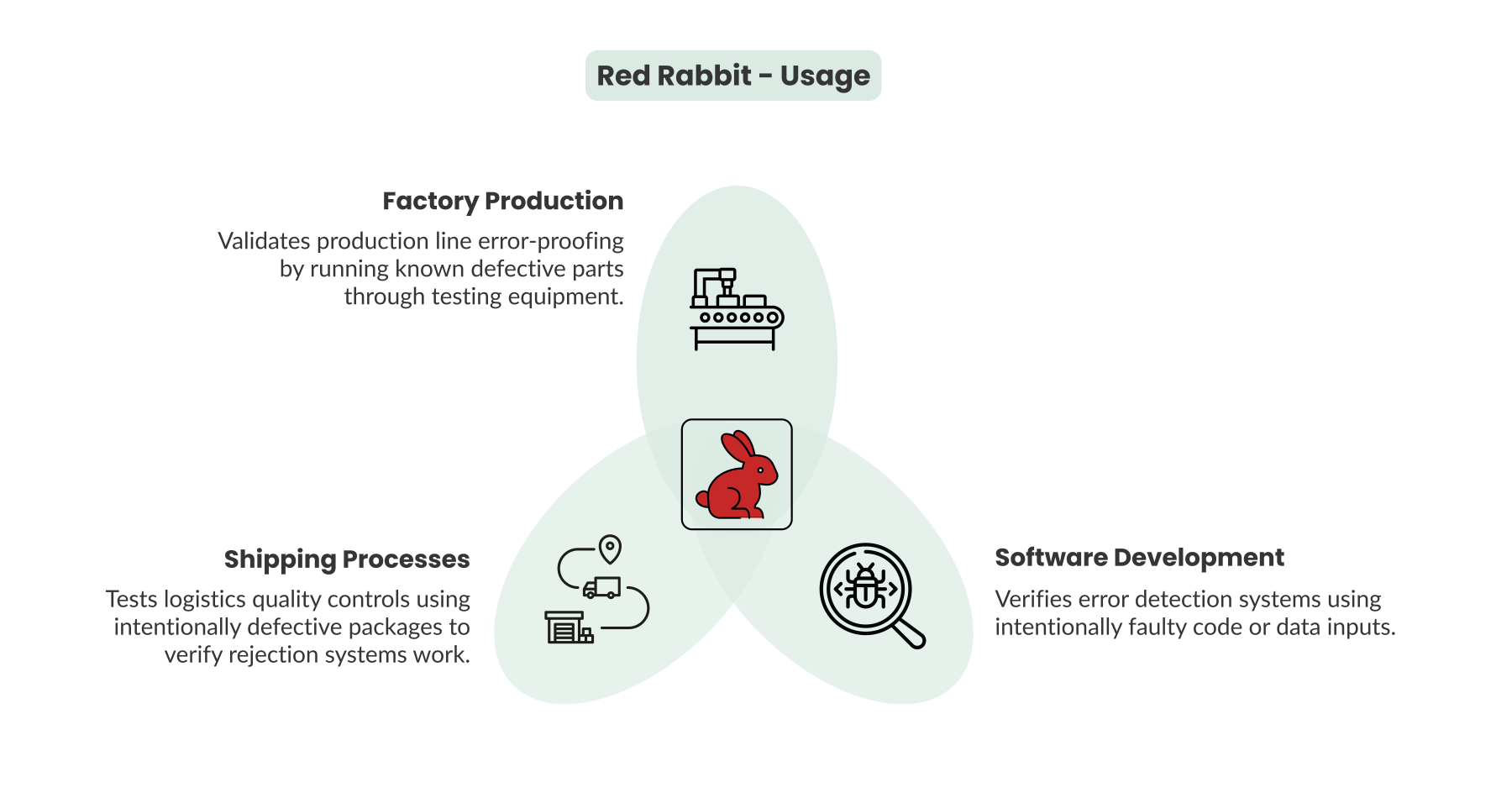
Therefore the red rabbit test is mainly used in factories that have ongoing production lines, such as assembly lines in car or electronics making. It can also be used in software making, shipping, and other areas where watching processes and finding problems quickly are important.
Principles or a Red Rabbit Test
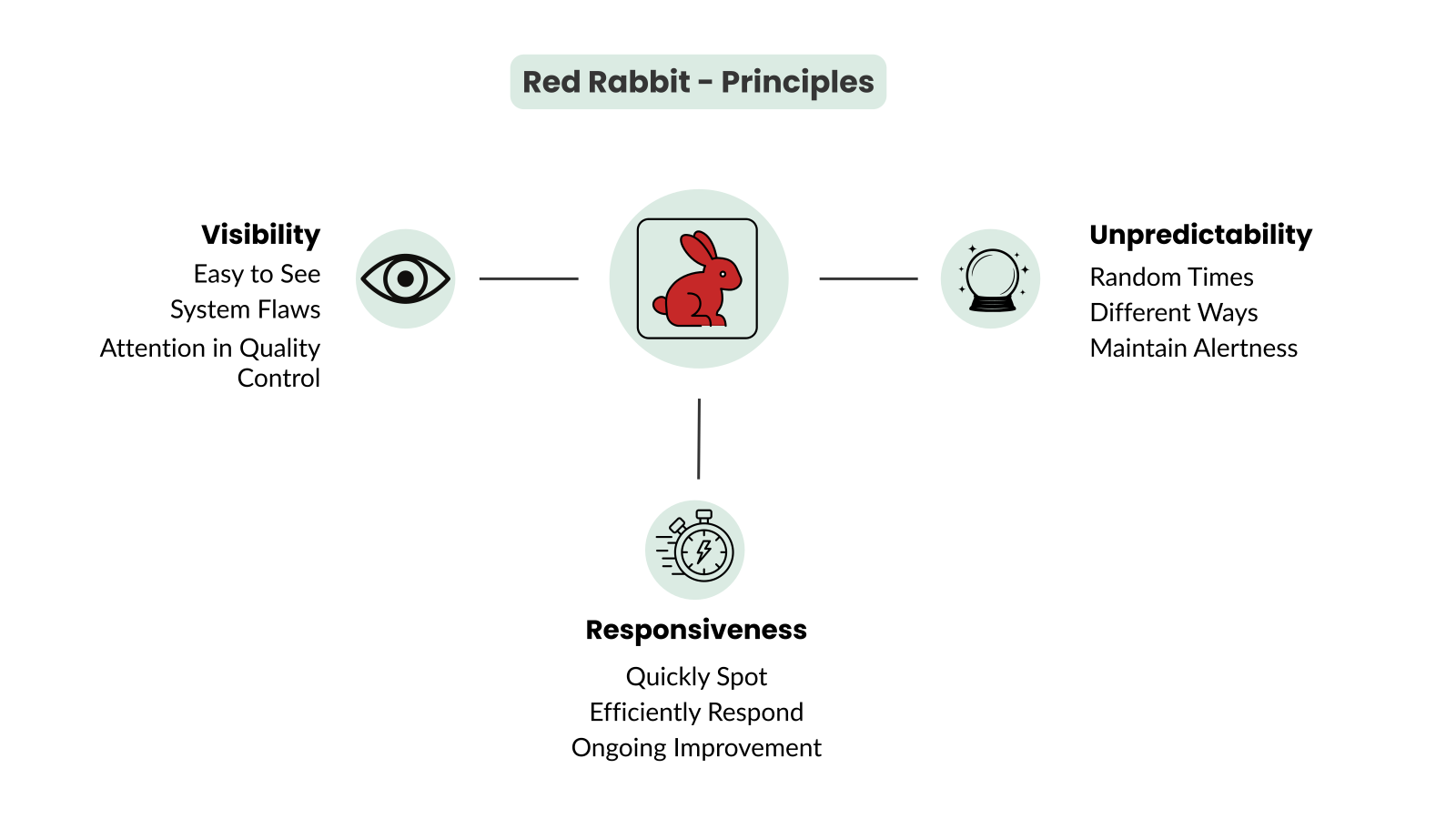
The principles of a Red Rabbit Test are:

Visibility
Visibility is an important rule in the Red Rabbit Test. It means that the test item, the Red Rabbit, must be easy to see during the production process. This visibility makes sure that the Red Rabbit is a clear sign of the system's ability to find problems. The aim is not to confuse the system, but to show that any failure to find the problem is due to flaws in the system, not because the test is hard to detect. By making the test item visible, the Red Rabbit Test checks the basic level of attention in the quality control system, ensuring that obvious mistakes are not missed during regular operations.

Unpredictability
Unpredictability is another important rule of the Red Rabbit Test, which helps keep the quality control process from becoming lazy or routine. By introducing the Red Rabbit at random times and in different ways, the test makes sure that workers and systems can't guess when or where a test will happen. This unpredictability keeps the quality control team alert, creating a setting where attention is maintained all the time. It pushes the system to work well in all situations and stops staff from developing predictable habits that could lead to missing real problems.

Responsiveness
Responsiveness in the Red Rabbit Test involves how quickly and efficiently a system can spot and respond to the added problem. This rule is important because the main purpose of the test is not just to find defects, but to do it quickly. A quality control system’s responsiveness shows how well it performs overall. It reflects both the ability to discover defects and the speed at which corrective actions can be taken, which is essential for reducing the effects of defects on the production line and the final product. This principle encourages ongoing improvement in the speed and accuracy of quality control processes, ensuring a flexible approach to quality assurance.
How the Red Rabbit Test Works
1. Plan the test
First thing to do for a Red Rabbit Test is make sure to plan well. This means figuring out what you want to check in the quality control process. It’s important to decide how often and when the test will happen so it stays unexpected. Planning also needs talking with different departments to make sure the Red Rabbit won’t cause too many problems in production. Good planning helps make sure the test fits well into the production flow and everyone knows what could happen, even if they do not know exactly when the test will take place.
2. Ensure noticeability of the Red Rabbit
Next, you need to make sure the Red Rabbit is easy to see but not too much. This means picking a part that is a different color or marked in a way that stands out from regular items but still makes sense in production. The goal is for the Red Rabbit to be seen by careful observers but not so obvious that it stops everything or causes panic. Finding this middle ground is important for testing how well the quality control process works during regular operations.
3. Record detection time and response
When the Red Rabbit is in the production line, it is important to watch closely to see how long it takes for someone to notice it and how they react. This part is key because it gives useful data about how well quality control is working. The recorded time should accurately include not just when the anomaly was seen but also how long it took to deal with it. This could mean taking away the part, informing supervisors, or starting any needed corrective actions.
4. Analyze results for process improvement
The last step is to look at the results of the Red Rabbit Test. This analysis should consider both the detection and response times related to the Red Rabbit, along with how it was managed. The findings can highlight where the quality control process might be falling short, like speed of detection, training for employees, or response steps. From this analysis, suggestions can be made for improvements. This step is crucial for the Red Rabbit Test to serve its role as a tool for ongoing quality enhancement, turning the insights into practical actions to better overall quality control.
Benefits of the Red Rabbit Test
Improves Defect Detection Speed
A main advantage of the Red Rabbit Test is that it speeds up defect detection. By often adding a clear flaw into the production process, this test helps quality control staff to be more aware and efficient in spotting issues. Over time, this increased awareness leads to quicker identification of real defects, cutting down the time taken to find and address these problems. This faster response is vital for limiting the negative effects of defects on production and product quality, ensuring that issues are fixed quickly before they grow worse.
Enhances Employee Alertness to Quality Issues
The Red Rabbit Test also boosts employees’ awareness of quality issues. The randomness of the test keeps employees on their toes, as they cannot foresee when the next test will take place. This ongoing alertness improves their focus on details and ability to notice outliers, not just during the tests but in their daily tasks. This increased awareness is helpful for the overall quality control system, creating a more attentive workforce focused on quality.
Provides Real-Time Feedback on Quality Control Systems
Another significant advantage of the Red Rabbit Test is that it provides instant feedback on how well quality control systems are working. Unlike other tests that may only give feedback after the fact, the Red Rabbit Test shows in real time how effective the quality control processes are. This quick feedback is crucial for identifying areas of weakness and making necessary changes swiftly. It allows for quick adjustments and immediate check on whether changes to the quality control system are working, ensuring optimal performance.
Encourages a Culture of Continuous Improvement
Finally, the Red Rabbit Test fosters a culture of continuous improvement in an organization. By consistently testing the quality control processes, it creates an environment where seeking improvement is standard. This regular examination and fine-tuning of processes highlight the significance of quality and efficiency within the organization’s values. Employees become more involved in enhancing quality control efforts, and management gains a method for encouraging a forward-thinking approach to quality assurance. This culture of ongoing improvement is vital for any organization aiming to uphold high quality and efficiency in a competitive landscape.
Limitations of the Red Rabbit Test
Risk of Being Predictable if Used Too Much
One major drawback of the Red Rabbit Test is that it may become predictable if used too frequently. The test works best when it’s unexpected. If employees start anticipating the Red Rabbit at set times or in specific ways, they might become less alert in their overall quality control tasks and only concentrate on spotting the test’s irregularities. This predictability can reduce the test’s effectiveness as a measure for improving quality awareness. Thus, it is important to change the frequency and type of the test to keep it surprising and useful for evaluating the quality control system.
May Not Fit All Production Settings
Another issue is that the Red Rabbit Test may not be appropriate for every production setting. In highly automated or advanced production systems, adding an unusual element might be impractical or might not provide useful insights. Likewise, in cases where production processes are very sensitive or where even minor disruptions are costly, the test might not be viable. The success of the Red Rabbit Test depends on the specifics of the production process and how adaptable the system is to handle such tests without negative consequences.
Needs Detailed Planning to Prevent Disruption
Lastly, the Red Rabbit Test needs careful planning to prevent avoidable interruptions in the production flow. Adding an anomaly to an operational production line should be done with caution to ensure it evaluates the quality control system without leading to excessive downtime or waste of resources. If not managed and carried out properly, the test could result in confusion, delays in production, and possible financial setbacks. This need for thorough planning and coordination means that the Red Rabbit Test might take up considerable time and effort to implement well, which could be a drawback for some organizations.
Best Practice for a Red Rabbit Test

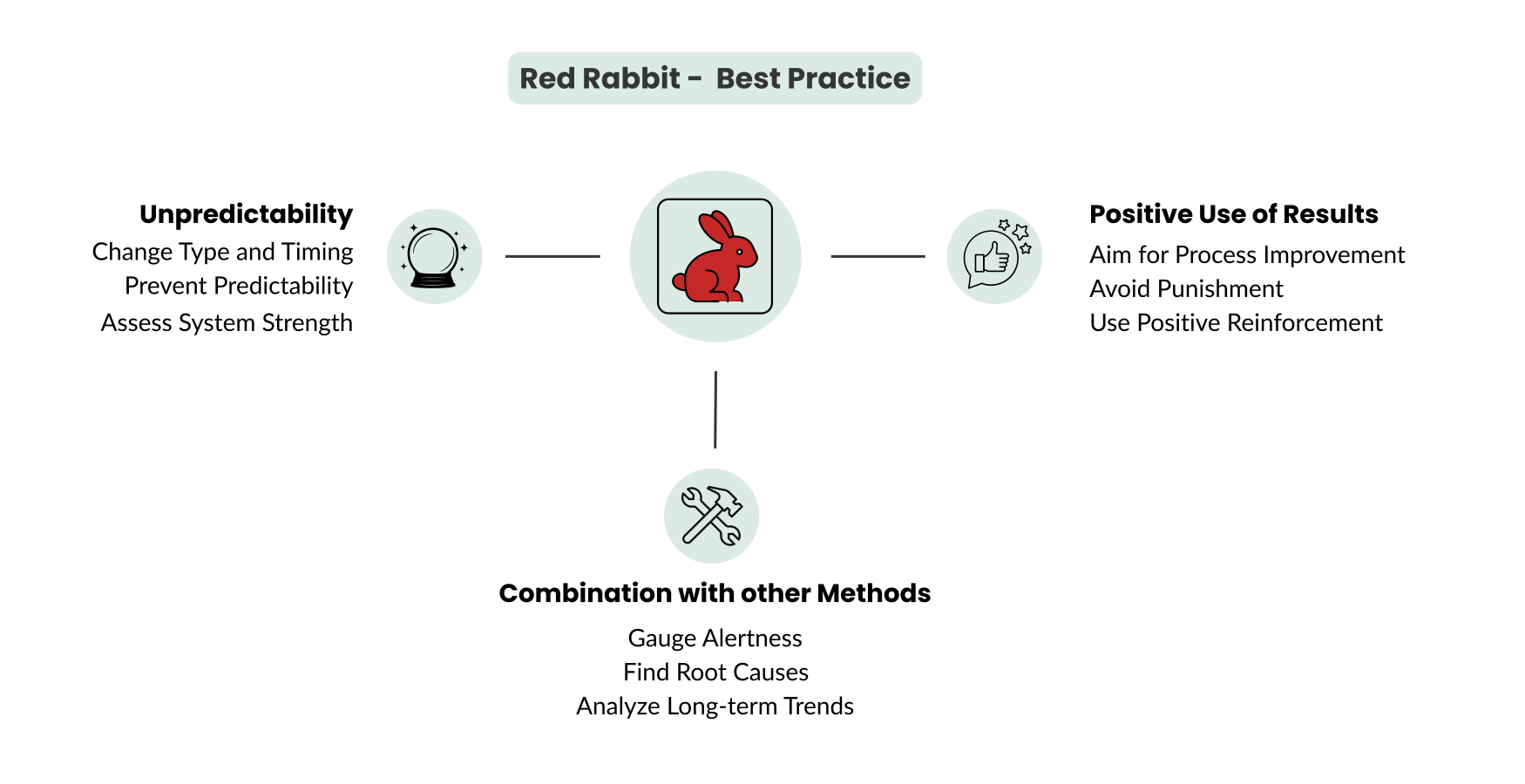
Alter the Red Rabbit Type and Timing for Unpredictability
A good practice for the Red Rabbit Test is to change the type and timing of the Red Rabbit often. This change helps keep unpredictability, which is important for the test's success. By altering the Red Rabbit's traits—like its color, shape, or where it appears—and bringing it in at random times, you stop workers from predicting the test. This method keeps the team alert to quality problems, not just ones similar to the Red Rabbit. It also helps check how strong the quality control system is under different conditions, offering a more thorough assessment.

Use Test Results to Enhance Processes, Not to Punish Employees
It’s crucial to use the Red Rabbit Test results productively, aiming for process improvement instead of punishing employees. The main purpose of the test is to find flaws in the quality control system and to use these findings for ongoing improvement. If employees worry about punishments from the test, it could create a fearful and defensive environment, which goes against the goals of quality assurance. Instead, using positive reinforcement and treating the results as chances to learn can create a more open and improvement-focused workplace, motivating employees to help improve quality processes.

Combine with Other Quality Control Methods for Complete Coverage
Lastly, to make the Red Rabbit Test work best, it should be used alongside other quality control methods for a well-rounded approach to quality assurance. The Red Rabbit Test is great for gauging the alertness and quickness of quality control systems, but other methods can offer different insights, like finding the root cause of defects or analyzing long-term trends. Merging the Red Rabbit Test with a broader quality management system provides a full view of quality control effectiveness. This combination helps an organization tackle a variety of quality issues and continually enhance its processes, resulting in improved product quality and better operational efficiency.
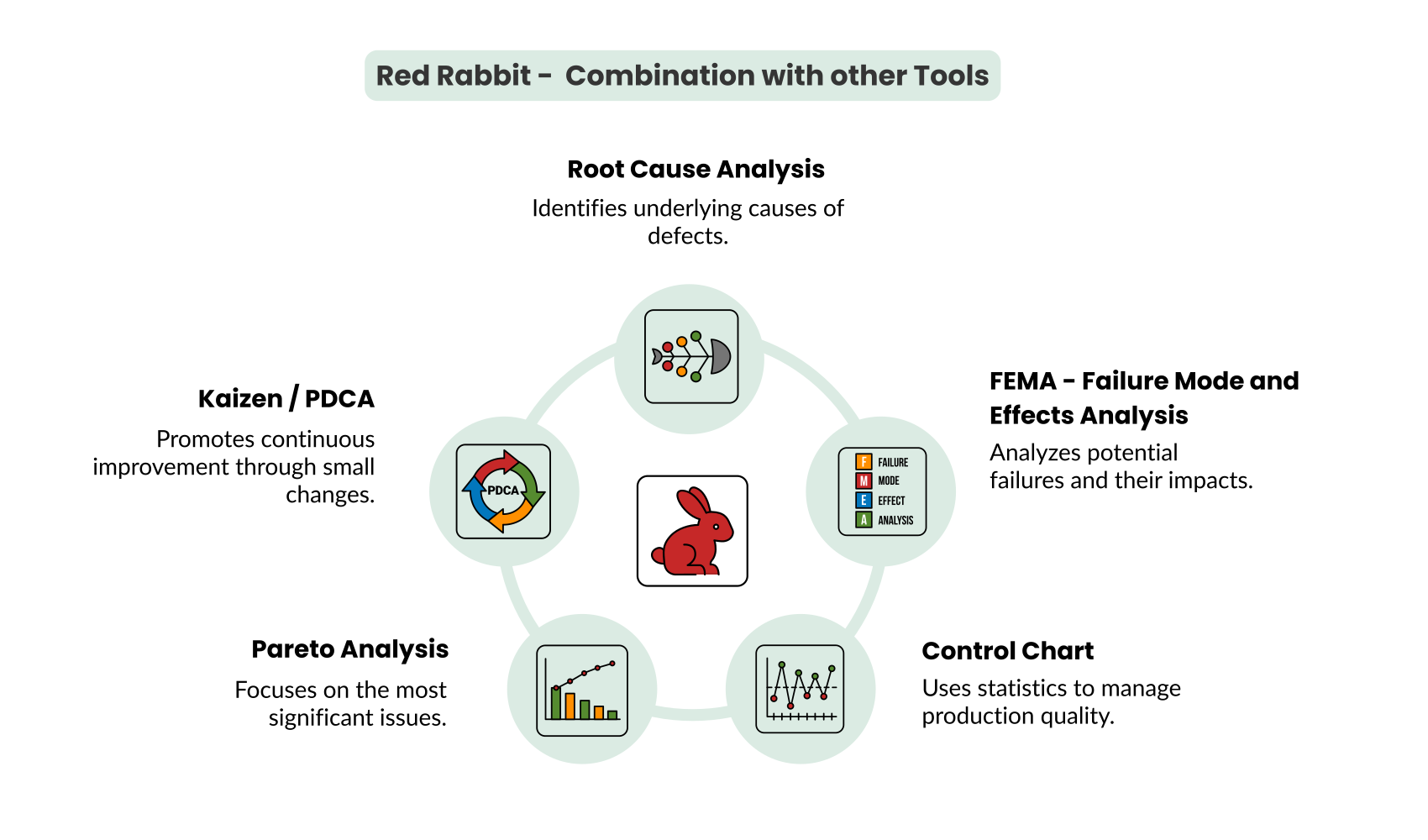
How the Red Rabbit Test Works with Other Quality Methods
The Red Rabbit Test checks quality in real-time. It works better when used with other quality control methods for a fuller understanding of the quality control system. Here are some methods that go well with the Red Rabbit Test:
Root Cause Analysis (RCA)
Purpose:
RCA aims to find the main reasons for ongoing defects or breakdowns. The Red Rabbit Test checks how well the quality control system reacts to clear problems, while RCA looks into deeper issues that are not obvious at first.
How it works together:
When the Red Rabbit Test shows repeated missed detections, RCA can find out if there is a shared root cause, such as lack of training, bad communication, or defective processes. RCA aims to make sure that problems are not just fixed for now but are fully understood and dealt with.
Failure Mode and Effects Analysis (FMEA)

Purpose:
FMEA is a method used to look at possible failures in a process or product. It sorts these failures by how serious they are, how likely they are to happen, and how hard they are to find. This way, teams can focus on prevention.
How it works together:
Using the Red Rabbit Test along with FMEA helps find risky spots where finding failures is important. The Red Rabbit Test checks if these important areas are monitored well in real time, making sure that the biggest risks are handled properly.
Statistical Process Control (SPC)
Purpose:
SPC employs statistics to keep track and manage production activities, seeking to ensure uniform quality by spotting and minimizing variation.
How it works together:
SPC generates continuous data indicating trends and differences from established norms. The Red Rabbit Test can be done occasionally with SPC to assess how well the system responds to real issues, enhancing the overall control SPC provides for process reliability.
Pareto Analysis
Purpose:
Pareto Analysis is for finding issues that matter most, based on the 80/20 rule (like how most problems come from a few causes).
How it works together:
When using Pareto Analysis with Red Rabbit findings, quality managers can spot which factors often cause missed detections or delayed responses. This helps make improvements in the areas that matter most, making quality control work better and more focused.
Kaizen (Continuous Improvement)

Purpose:
Kaizen is a way of thinking about making small, steady improvements everywhere in a company.
How it works together:
Following each Red Rabbit Test, the Kaizen method can help make changes according to what the results show. For instance, if the time to detect problems was lengthy, Kaizen can help introduce minor, organized tweaks in processes, communication, or staff training to boost general quality and responsiveness.
Red Rabbit Test Example: Pizza
The Zero-Defect Pizza Red Rabbit
For Zero-Defect Pizzeria focusing on high pizza quality, a Red Rabbit Test can be modified to check process reliability and attention in areas like ingredient quality, assembly, and final look.
Objective:
To evaluate the awareness and responsiveness of the pizza-making team and quality control measures in spotting and fixing an intentional defect in the production process, ensuring no faulty pizzas reach customers.
Red Rabbit Test Steps:
1. Plan the test
- Defect Type:
- Introduce a clear, non-standard ingredient or visual issue in a sample pizza to create a defect. This could be an unusual sauce design or an extra bell pepper placed differently than usual.
- Frequency and Unpredictability:
- Randomly place this “Red Rabbit Pizza” at various times, especially during busy hours when focus might wane.
- Communication:
- Notify relevant managers and supervisors about the test to track detection and responses without informing the pizza-making team.
- Defect Type:
2. Ensure noticeability
- Defect Visibility:
- Implement a clear and obvious visual difference, like a topping layout that strays noticeably from the usual arrangement (for example, a big basil leaf in the middle of a cheese pizza or a strange sauce swirl). This aspect should be clear to an attentive observer, while still being subtle enough to challenge the team’s level of awareness without causing too much disruption.
- Appropriate Defect:
- Select a Red Rabbit that signifies a real quality problem, such as excessive cheese, absence of an essential topping, or a crust shape that is not uniform.
- Defect Visibility:
3. Record detection time and response
- Tracking Detection:
- The quality control manager or a chosen observer checks how fast the team finds the odd pizza while assembling, baking, or inspecting at the end.
- Response Actions:
- After detection, write down what staff do, such as taking the pizza off the line, notifying a manager, or fixing the pizza before serving it. Also, note the times for both detection and resolution for later review.
- Tracking Detection:
4. Analyze results for process improvement
- Review of Results:
- Look at how fast the team found the issue and what actions they did. If finding the defect was slow or varied, point out places where training or workflow changes are needed. For example, if the defect was spotted only at the last check, think about adding steps to enhance focus during the assembly process.
- Enhancements:
- From the results, suggest improvements that can be acted upon, like boosting training on ingredient guidelines, instructing workers to verify every step, or changing quality control methods to enhance real-time defect detection.
- Review of Results:
Results
- Increased Awareness: Testing with a Red Rabbit encourages the team to stay vigilant about quality, especially during peak hours when errors are more likely.
- Immediate Feedback: The test provides direct feedback on the quality control system’s effectiveness, enabling swift adjustments in processes or additional training where necessary.
- Enhanced Customer Satisfaction: By refining defect detection, the pizzeria can ensure that only high-quality pizzas reach customers, aligning with their “zero-defect” commitment.
- Continuous Improvement: This regular testing promotes a proactive quality culture, making quality a consistent focus among the staff.
More Things to Think About
- Change It Up:
- To make the Red Rabbit less expected, change the type of flaw on each test day — for instance, adjusting the crust thickness or using a strange topping arrangement to mimic random ingredient errors.
- Mix Techniques:
- Combine the Red Rabbit Test results with other approaches, such as 5S for better organization of the workspace or SPC for monitoring production uniformity, which will strengthen quality standards.
- Change It Up:
FAQ
What is the Red Rabbit Test?
The Red Rabbit Test is a quality control method where a distinct, intentionally flawed part (the Red Rabbit) is introduced into a production process. The time it takes for this anomaly to be detected and responded to is measured, providing insights into the effectiveness of the quality control system.
Is a Red Rabbit Test a root cause analysis?
No. It validates detection. Root cause analysis starts after a gap is confirmed.
Where is the Red Rabbit Test used?
The Red Rabbit Test is primarily used in manufacturing settings, such as automotive parts production or electronics assembly. It can also be adapted for use in software development and other areas where timely defect detection is crucial.
What is the objective of the Red Rabbit Test?
The main goal of a Red Rabbit Test is to assess and improve the speed and accuracy of defect detection within a quality control system. It challenges the existing mechanisms and promotes vigilance and responsiveness.
What is the history of the Red Rabbit Test?
Originating in the mid-20th century, the Red Rabbit Test evolved from traditional quality control practices. It introduced an element of unpredictability and real-time assessment to standard quality control procedures.
What are the core principles of the Red Rabbit Test?
The test is based on the principles of visibility (making the test defect noticeable), unpredictability (ensuring the test cannot be anticipated), and responsiveness (measuring the speed of defect detection and action).
How is a Red Rabbit Test conducted?
- Plan the test carefully to define objectives and coordination.
- Ensure the Red Rabbit is noticeable yet not disruptively so.
- Monitor the time from introduction to detection and response.
- Analyze the results to identify areas for process improvement.
What are the benefits of using the Red Rabbit Test?
- Improves defect detection speed.
- Enhances employee alertness to quality issues.
- Provides real-time feedback on quality control systems.
- Encourages a culture of continuous improvement.
What are the limitations of the Red Rabbit Test?
- Risk of becoming predictable if overused.
- May not be suitable for all production environments.
- Requires careful planning to avoid production disruption.
What are some best practices for implementing the Red Rabbit Test?
- Vary the type and timing of the Red Rabbit to maintain unpredictability.
- Use test results constructively to improve processes.
- Combine with other quality control methods for a comprehensive approach.
What is an example of the Red Rabbit Test in action?
- In an electronics assembly plant, a printed circuit board (PCB) with a distinctively colored resistor is introduced into the production line. The time taken to detect and address this anomaly provides insights into the alertness and efficiency of the quality control system, highlighting areas for process improvement.