
What
Action management is an inclusive approach that quality management systems use to create processes, correct problems, and provide continual improvement.
It comprises of a planned series of activities focused at problem solving and improvement that are applied along with the critical monitoring measures for performance quality product or service.
The idea of action management is based on the work of quality gurus like W. Edwards Deming and Joseph Juran, who believed that systematic problem-solving was essential to achieving constant improvement in quality.
When
Action management is utilized across many industries, including manufacturing, healthcare, software development, and customer service. It is integrated part of quality management systems, project management frameworks, and continuous improvement methodologies such as Lean and Six Sigma.
It plays a key role in quality management systems, assisting companies in improving product quality and customer satisfaction.
Why
The main purpose of action management is to manage all corrective and preventive actions (CAPA) in a controlled and transparent way. The purpose of it is to reduce risk, resolve problems, prevent recurrence, improve processes and customer satisfaction via quality improvements.
Principles
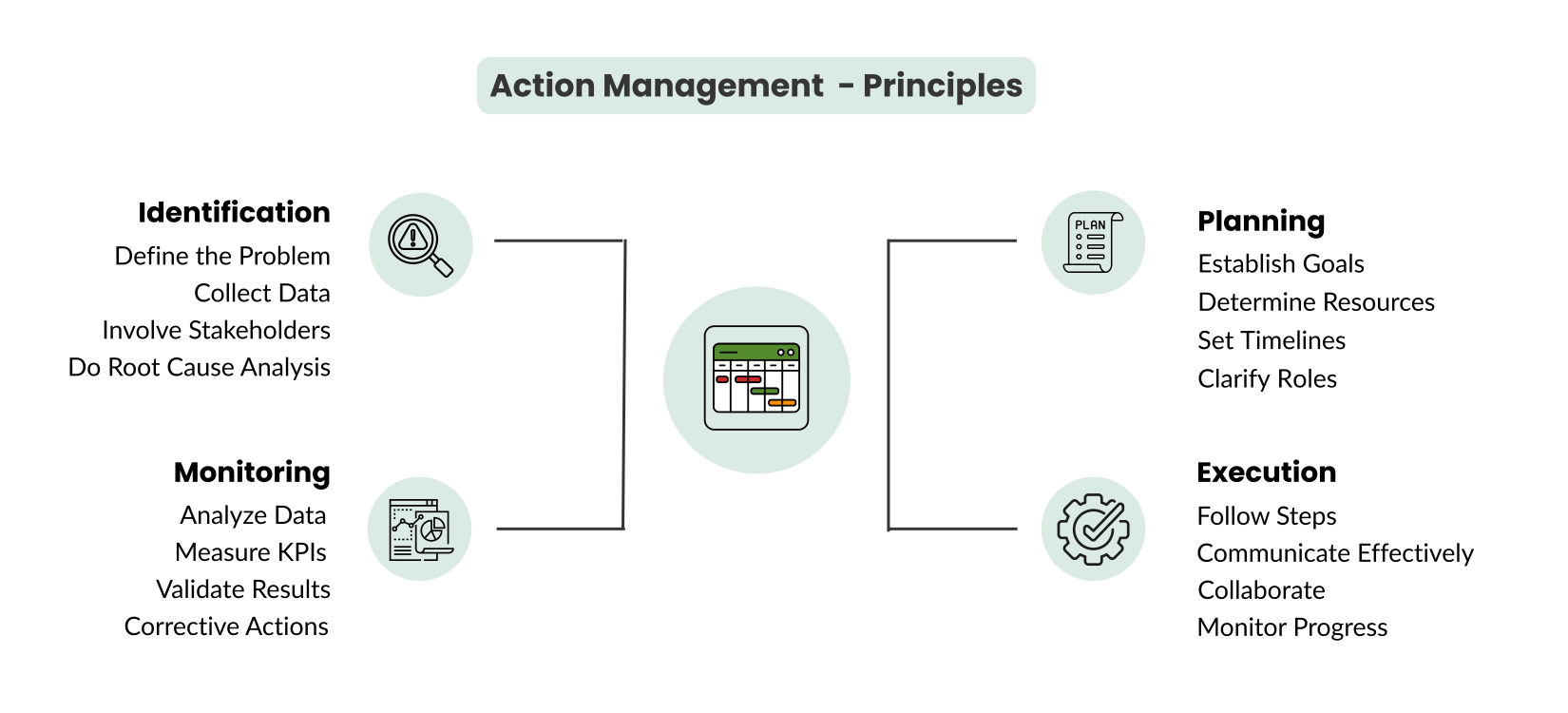
Action Management is guided by the laws of:

Identification: Describe problem or improvement opportunity in detail.
This is the first fundamental principle of action management: identification. This is done by either meticulously defining the problem or identifying an area for improvement. This will be done with an overview of what the problem is, how much of a throughput bug and this could hurt quality. You must collect important data, involve the stakeholders there, and use different problem-solving tools including root cause analysis to be sure about what is really happening. This ends up providing organizations the definition of what is broken, or what could be made better resulting in effective planning and execution becoming a necessity.

Planning: Create an actionable plan with tasks, roles and timelines
The planning stage of action management is where the strategy to resolve the issue or benefit from the prospect becomes an outline. Simply put, this is a step by step plan specifying tasks, accountabilities and timelines. In this stage, organizations need to establish clear goals and determine what resources are required, along with target success metrics. A good action plan acts as a roadmap, helping teams with tracking and keeping them from the evils of scope creep, and it helps to clarify roles and duties for everyone involved. An organized plan is required to execute and continuously monitor.

Execution: Implement the action plan as per the defined steps
Execution is the phase where the rubber meets the road. It involves putting the action plan into action by implementing the defined steps and tasks. This phase requires disciplined execution of the plan, sticking to timelines, and closely following established processes. Effective communication and collaboration among team members are essential to ensure that everyone understands their roles and performs their tasks diligently. It's also crucial to monitor progress and address any obstacles or challenges that may arise during the execution phase promptly. Successful execution is key to achieving the desired outcomes and driving quality improvement.

Monitoring: Continuously assess progress and make adjustments as necessary
Monitoring is an ongoing and critical aspect of action management. It involves continuously assessing the progress of the implemented actions and making adjustments as necessary. Organizations should collect and analyze relevant data on a regular basis, measure key performance indicators, and compare results against the defined objectives. If discrepancies or deviations from the plan are identified, prompt corrective actions should be taken to realign efforts with the desired outcomes. Monitoring ensures that the improvement process remains dynamic and adaptable, allowing organizations to respond effectively to changing circumstances and maintain a focus on achieving and sustaining quality improvements over time.
How To
1. Identify the issue or improvement opportunity
Identifying the issue or improvement opportunity is the foundational step in the action management process. This involves keenly observing and analyzing the current state of operations, products, or services to pinpoint areas that require attention.
It often involves data collection, customer feedback analysis, and root cause analysis. By conducting a thorough assessment, organizations can determine the scope and significance of the problem or opportunity, setting the stage for targeted and effective improvement efforts.
2. Assemble a cross-functional team if needed
In many cases, addressing complex issues or pursuing improvement opportunities requires a diverse set of skills and expertise.
Assembling a cross-functional team comprising individuals from different departments or disciplines is essential. This team should include members with varied perspectives, experiences, and skills relevant to the identified problem. Collaborative and interdisciplinary teams bring fresh insights and innovative solutions, ensuring a holistic approach to problem-solving and quality improvement.
3. Create a thorough action plan with specific goals
After the problem or opportunity has been identified, and one has a team in place, the next step is to produce an action plan.
This plan is your guide to the particular actions, tasks and milestones you need to reach in order to overcome the problem or recognize the opportunity.
Objectives need to be clear and specific and should articulate what the organization wants to accomplish through improved work. This action plan does this by giving a complete structure for the whole process, ensuring that no matter how many are working on marketing everyone is synchronized and unified to corner in on penetrating the desired outcomes.
4. Allocate responsibilities and establish timelines
In the process of an action plan it is important, that responsibilities are divided between team members and realistic time lines for each task and action are established. Roles and responsibilities must be clearly defined to keep everyone updated about what they have to do from their side during the execution, avoiding in confusion and re-do of stuff.
Timelines create a sense of urgency and accountability which is great for creating momentum and making sure the improvement initiative remains on track. Proper division of responsibilities and timelines are critical to get implemented properly.
5. Execute and monitor results
This is when the execution phase begins, and it allows the action plan to take shape. This is where the plan is implemented and team members are following through on their assigned tasks and activities as outlined in your timeline.
During the phase, it is critical that progress be regularly measured to confirm that activities are proceeding as scheduled and in alignment with the specified goals. Ongoing check-ins and communications amongst team members and relevant stakeholders are critical to identify any issues or impediments well in advance, allowing for timely remedy of the same so as to keep up the improvement effort momentum.
6. Gather Data and Analyze Results
Data collection, and analysis lies at the heart of every action management process. Organizations should collect data as to how effective their effort was at influencing the improvement initiative, both during execution and post-execution.
Such data can include performance metrics, customer feedback and a number of other key indicators. Analysis of the data collected allows organizations to determine just how effective their actions are, and whether they are meeting (or trending away from) desired objectives. The data drives the insights that serve as feedback to help make better decisions and provide guidance for future improvements.
7. Make adjustments and standardize improvements
Continuous improvement is the ultimate goal of action management. After analyzing the results, organizations should be prepared to make necessary adjustments to the action plan, processes, or procedures.
If certain actions did not yield the desired results, they should be revised or replaced with more effective alternatives. Once successful improvements are identified, efforts should be made to institutionalize these changes, ensuring they become a standard part of the organization’s operations. This ensures that the benefits of quality improvement are sustained over the long term, contributing to a culture of continuous excellence.
Benefits
Improved product or service quality

One of the primary benefits of effective action management is the substantial improvement in product or service quality. By systematically identifying and addressing issues, organizations can refine their processes, eliminate defects, and enhance the overall quality of their offerings. This improvement not only increases customer satisfaction but also strengthens the organization’s reputation in the market, leading to higher customer loyalty and repeat business.
Enhanced operational efficiency
Efficiency is a key driver of success in any organization, and action management plays a crucial role in optimizing operational processes. Through action planning and execution, businesses can streamline workflows, eliminate bottlenecks, and reduce unnecessary steps. This increased efficiency not only saves time and resources but also contributes to cost reduction and improved competitiveness in the marketplace.
Increased customer satisfaction
Customer satisfaction is a paramount goal for businesses, and action management contributes significantly to achieving it. By addressing issues and continually improving processes, organizations can better meet customer expectations. Improved product quality, faster response times, and enhanced customer service all lead to higher levels of satisfaction among customers, resulting in increased customer loyalty and positive word-of-mouth referrals.
Data-driven decision-making
Action management relies on data collection, analysis, and monitoring to drive improvements. This data-driven approach empowers organizations to make informed decisions based on concrete evidence rather than intuition or guesswork. By analyzing performance metrics and customer feedback, businesses can identify trends, spot areas for improvement, and make strategic decisions that align with their quality objectives.
Reduction in defects and waste
Another significant benefit of action management is the reduction in defects and waste. Through systematic problem-solving and process optimization, organizations can identify the root causes of defects and implement corrective actions to prevent their recurrence. This reduction in defects not only saves resources but also enhances product or service reliability and customer satisfaction. Additionally, by eliminating waste in processes, such as reducing excess inventory or unnecessary steps, organizations become more cost-effective and environmentally responsible.
Limitations
Overemphasis on short-term fixes without addressing root causes
One limitation of action management is the potential for organizations to focus too heavily on short-term fixes rather than delving into the underlying root causes of problems.
While immediate solutions may resolve immediate issues, they can mask deeper systemic problems. This can lead to recurring problems in the long run, creating a cycle of continuous firefighting without sustainable improvements. To overcome this limitation, organizations should balance the need for quick fixes with a commitment to root cause analysis and systemic improvements to address issues at their source.
Resource-intensive, especially for complex issues

Implementing action management can be resource-intensive, particularly when dealing with complex and multifaceted issues.
In such cases, it may require a significant investment of time, manpower, and financial resources. Complex issues often involve in-depth analysis, extensive planning, and comprehensive execution efforts. This can strain an organization’s resources, making it challenging to allocate the necessary personnel and funds. To mitigate this limitation, organizations should prioritize and allocate resources wisely, focusing on areas with the highest potential impact.
Implementation is Highly Dependent on Stalwart Leadership
Action management that does work is fully supported by strong leadership and commitment throughout an organization.
When leadership does not provide strong support, programs run the risk of being blocked, directionless or losing traction. Leadership is the key to laying down the vision, explaining why quality improvement is important, and giving you adequate resources and powers to make improvements properly.
This has proven to be true for action management efforts, too. They can lose steam and struggle to reach their target goals without robust support from leadership. Consequently, high-functioning leadership that is not only engaged in but aligned with quality improvement objectives is essential to ensure successful integration for organizations.
Best Practice

Prioritize by impact and feasibility
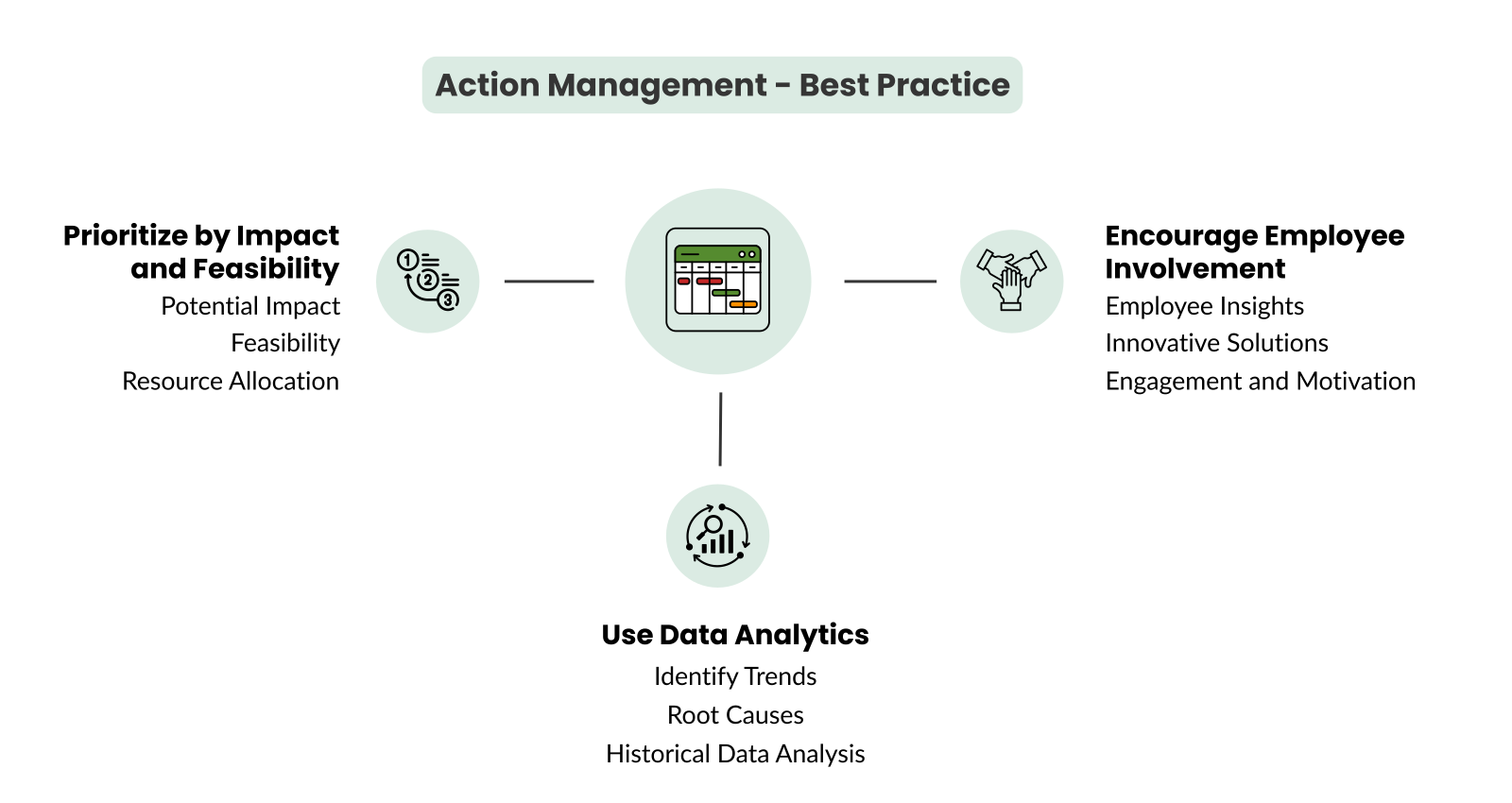
In action management a good tip is to prioritize actions in 2 dimensions: — potential impact vs.facility. Some improvement opportunities are more important than others and organizations should weight the consequences and the feasibility based on available resources. Focussing action on high impact, practical areas delivers the greatest bang-for-the-buck and more rapid results, while showing that improvements underpin strategic goals and priorities.

Use data analytics to identify trends and root causes
Data analytics plays a crucial role in effective action management. Utilizing data to identify trends and root causes of issues can provide valuable insights. By analyzing historical data and patterns, organizations can pinpoint recurring problems and their underlying causes. This not only helps in making informed decisions but also assists in formulating targeted action plans that address the root issues rather than merely addressing symptoms. Leveraging data analytics empowers organizations to be more proactive and precise in their approach to quality improvement.

Encourage employee involvement and empowerment in the process
Involving employees at all levels of the organization is a key strategy for success in action management. Employees are often closest to the processes and can offer valuable insights and innovative solutions. Encouraging their involvement and empowering them to contribute to the improvement process fosters a culture of ownership and accountability. It can lead to increased engagement, motivation, and a sense of pride in contributing to positive changes. Engaged employees are more likely to actively participate in action planning and execution, making the entire process more effective and sustainable.

Pizza-Example
Problem Scenario:
A Margherita line at a Zero Defect Pizza production plant has excessive defects. Almost daily customers are calling and complaining they received a pizza where some of it looks like it’s been eaten by mice as well that are being partially cooked, many missing the sauce or cheese.
Action Management Skills Breakdown Step by Step:
1. Identifying the Issue
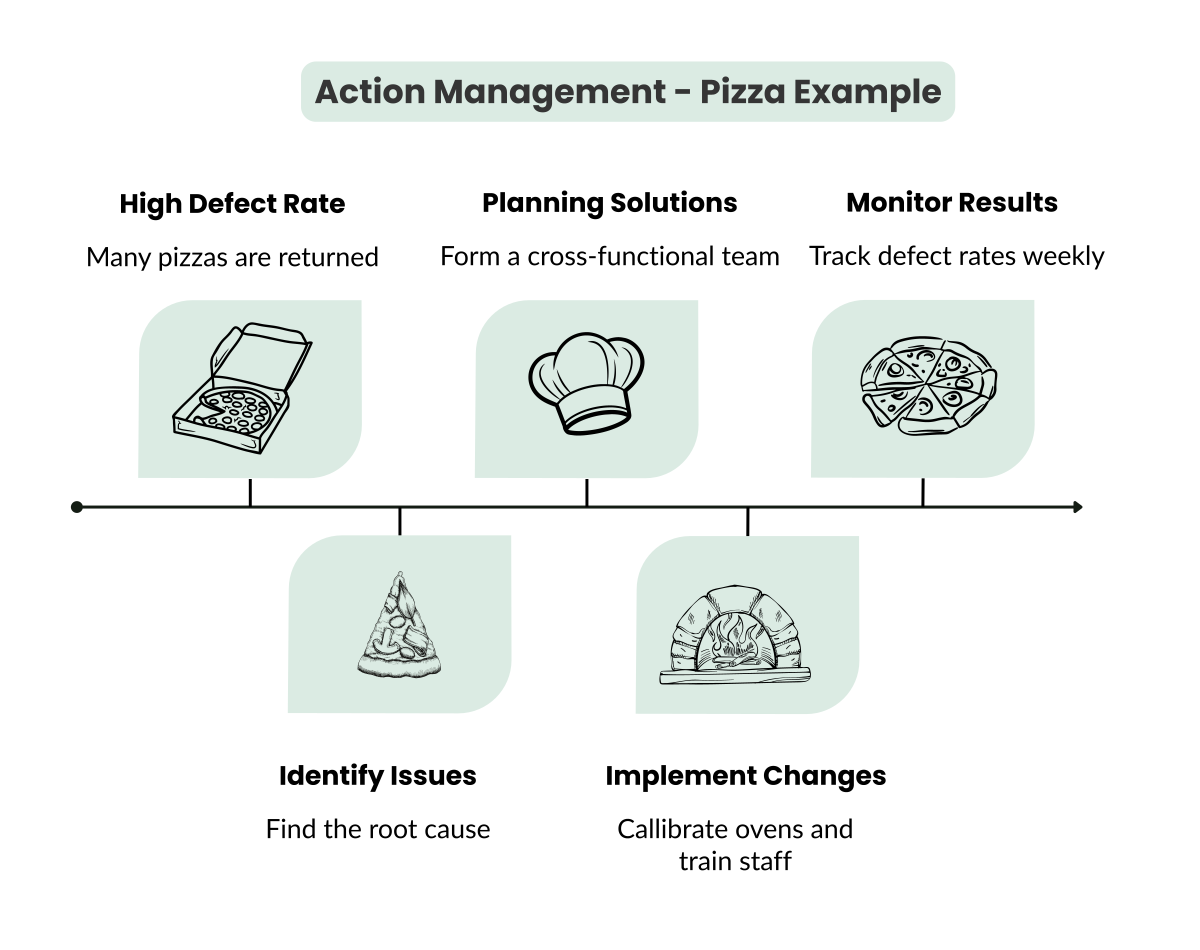
The company notices a significant increase in customer complaints regarding their Margherita pizzas. Upon closer inspection, it is found that 10% of pizzas are being returned or flagged due to defects such as:
- Uneven baking (some pizzas are undercooked, others are overcooked).
- Missing or uneven distribution of ingredients (cheese or sauce is inconsistent).
- Packaging issues (pizzas damaged in transit or mislabeled).
This is affecting customer satisfaction, leading to negative reviews and decreasing repeat orders.
2. Planning
To address the issue, the company forms a cross-functional team consisting of:
- Quality control specialists: To identify where in the production process defects are occurring.
- Production line managers: To oversee the investigation and propose changes.
- Data analysts: To assess historical defect data and identify patterns or root causes.
- Supplier relations managers: To ensure ingredient consistency from suppliers.
Key Activities:
- Analyze the data: Historical data is reviewed to spot trends (e.g., is the defect rate higher on certain days, with certain employees, or with specific batches of ingredients?).
- Investigate root causes: The team discovers that the main causes of defects are:
- Inconsistent oven temperatures due to a malfunctioning calibration system.
- Lack of standardization in ingredient distribution by employees.
- Flawed packaging procedures causing damage during transportation.
- Investigate root causes: The team discovers that the main causes of defects are:
- Create an action plan: The team outlines process improvements, such as:
- Calibrating ovens more frequently.
- Implementing an automated ingredient dispenser to ensure consistent topping distribution.
- Training employees on quality checks before packaging.
- Create an action plan: The team outlines process improvements, such as:
3. Execution
The company notices a significant increase in customer complaints regarding their Margherita pizzas. Upon closer inspection, it is found that 10% of pizzas are being returned or flagged due to defects such as:
Implement the process changes:
- Oven calibration: Maintenance is conducted to ensure that oven temperatures remain consistent. A weekly calibration schedule is introduced.
- Ingredient distribution: The company introduces an automated system for applying sauce and cheese in precise amounts, ensuring consistency.
- Employee training: A training program is rolled out to ensure employees perform quality checks before pizzas are packaged and shipped.
Quality control improvements:
- New quality control checkpoints are added at multiple stages (before baking, after baking, and pre-packaging) to catch defects earlier.
- Clear SOPs (Standard Operating Procedures) are created, outlining the steps for maintaining quality standards during production.
4. Monitoring
The company begins tracking defect rates weekly to see if the changes are effective. They collect data on:
- Number of defective pizzas (categorized by the type of defect: baking, missing ingredients, packaging).
- Customer feedback (through surveys and reviews).
- Time to resolve defects (how quickly production line workers can fix issues when identified).
5. Results
After several months of these improvements:
- Defect rates drop from 10% to 1% in the Margherita pizza line.
- Customer satisfaction increases, as reflected in positive reviews and fewer complaints.
- Sales grow, with repeat customers returning for consistent, high-quality pizzas.
- Profitability improves due to reduced waste, fewer returns, and lower rework costs.
- The company gains a reputation for high-quality, reliable pizza, attracting new customers.
FAQ
What is Action Management?
Action management is an inclusive approach used in quality management systems to create processes, correct problems, and drive continual improvement. It comprises a planned series of activities focused on problem-solving and enhancement, applied alongside critical monitoring measures for product or service quality.
The concept of action management is based on the work of quality pioneers like W. Edwards Deming and Joseph Juran, who emphasized systematic problem-solving as essential to achieving continuous improvement.
When is Action Management used?
Action management is widely utilized across industries such as:
Manufacturing – Ensuring process stability and defect reduction.
Healthcare – Managing patient safety initiatives and compliance.
Software Development – Tracking and resolving software defects.
Customer Service – Addressing complaints and improving satisfaction.
It is an integral part of quality management systems (QMS), project management frameworks, and continuous improvement methodologies like Lean and Six Sigma.
Why is Action Management important?
The primary purpose of action management is to control and document corrective and preventive actions (CAPA), aiming to:
Reduce risks and prevent recurrence of issues.
Improve processes and increase efficiency.
Enhance customer satisfaction and overall quality performance.
What are the key principles of Action Management?
Identification – Define the problem or improvement opportunity in detail.
Planning – Develop a clear action plan with tasks, roles, and timelines.
Execution – Implement the action plan following structured steps.
Monitoring – Continuously assess progress and make necessary adjustments.
How is Action Management implemented?
1. Identify the Issue
Conduct a root cause analysis (RCA) to understand underlying problems.
Collect data, involve stakeholders, and document findings.
2. Assemble a Cross-Functional Team
Gather experts from different departments to provide diverse insights.
Ensure collaboration between stakeholders for an effective resolution.
3. Create an Action Plan
Define specific goals and outline a structured plan.
Set measurable success criteria and required resources.
4. Allocate Responsibilities and Establish Timelines
Assign roles clearly to ensure accountability.
Establish deadlines to maintain momentum and track progress.
5. Execute and Monitor Results
Implement the plan while maintaining oversight.
Regularly track performance metrics and progress.
6. Gather Data and Analyze Results
Measure effectiveness using predefined KPIs.
Identify trends and areas needing further refinement.
7. Adjust and Standardize Improvements
If actions succeed, integrate them into standard procedures.
If needed, revise and repeat the action management cycle for ongoing enhancement.
What are the benefits of Action Management?
Improved Product or Service Quality – Reduces defects and enhances reliability.
Enhanced Operational Efficiency – Optimizes processes and minimizes waste.
Increased Customer Satisfaction – Leads to better customer experiences and brand loyalty.
Data-Driven Decision-Making – Ensures actions are based on real insights.
What are the limitations of Action Management?
Overemphasis on Short-Term Fixes – Risks addressing symptoms rather than root causes.
Resource-Intensive – Requires significant time, training, and personnel involvement.
Leadership Dependency – Success depends on strong management commitment.
What are best practices for effective Action Management?
Prioritize by Impact and Feasibility – Focus on high-value improvements first.
Use Data Analytics – Identify trends and root causes to drive decisions.
Encourage Employee Involvement – Empower teams to take ownership of improvements.
Regularly Update and Review Actions – Ensure ongoing effectiveness and alignment with business goals.